Stomach, Thigh or Arm: Does It Matter Where You Inject Ozempic?
Ozempic works the same in the stomach, thigh or upper arm: the label says exposure is similar. Sites compared, a rotation plan, mistakes to avoid.
Written by Dr. Sheri Tomas. Updated October 29, 2026.
It does not matter for how well Ozempic works whether you inject it into your stomach, thigh or upper arm. The prescribing information states that similar exposure to semaglutide is achieved from all three sites, so the dose that reaches your bloodstream, and therefore the effect on blood sugar and appetite, is the same wherever the needle goes. What does differ between the sites is comfort, how easy each is to reach, and how much fat lies under the skin, and those practical differences are enough to make one site better for you than another. The one rule the label insists on is rotation: use a different spot each week, even if you stay in the same body area. This guide compares the three sites, explains why the stomach is the most popular but not the 'strongest' choice, gives a rotation plan, and covers the injection mistakes that matter more than the site does.
Is It Better to Inject Ozempic in the Stomach or Thigh? The Short Answer
- 1Neither is better for results. The Ozempic label says similar exposure is achieved in the abdomen, thigh and upper arm.
- 2The stomach is the most popular site because it is easy to see, easy to pinch and usually has the most fat under the skin.
- 3The thigh is a good alternative for people with little abdominal fat, scars or a waistband that rubs.
- 4The upper arm works but is hard to reach yourself; it is easiest when someone else injects.
- 5Rotate every week: a different spot each time, at least a couple of centimetres from the last, to avoid lumps under the skin.
- 6Technique matters more than site: holding the pen for the full count, using a new needle each time and doing the flow check with each new pen.
What the Label Says About Injection Sites
The Ozempic prescribing information makes three statements that settle most of the questions people ask. Section 2.2 says to administer Ozempic subcutaneously, meaning into the fat just under the skin, in the abdomen, thigh or upper arm, and to use a different injection site each week when injecting in the same body region. Section 12.3, which covers pharmacokinetics, says that similar exposure is achieved with injection in the abdomen, thigh or upper arm. And the label allows Ozempic and insulin to be injected in the same body region, provided the two injections are not next to each other. The label does not rank the sites, does not recommend one over another, and does not tell anyone to change site if they feel the drug is weaker. It also allows the injection at any time of day, with or without meals, on the same day each week.
Stomach vs Thigh vs Upper Arm: How They Compare
Ozempic injection sites compared
Absorption
Similar exposure (label)
Similar exposure (label)
Similar exposure (label)
Where exactly
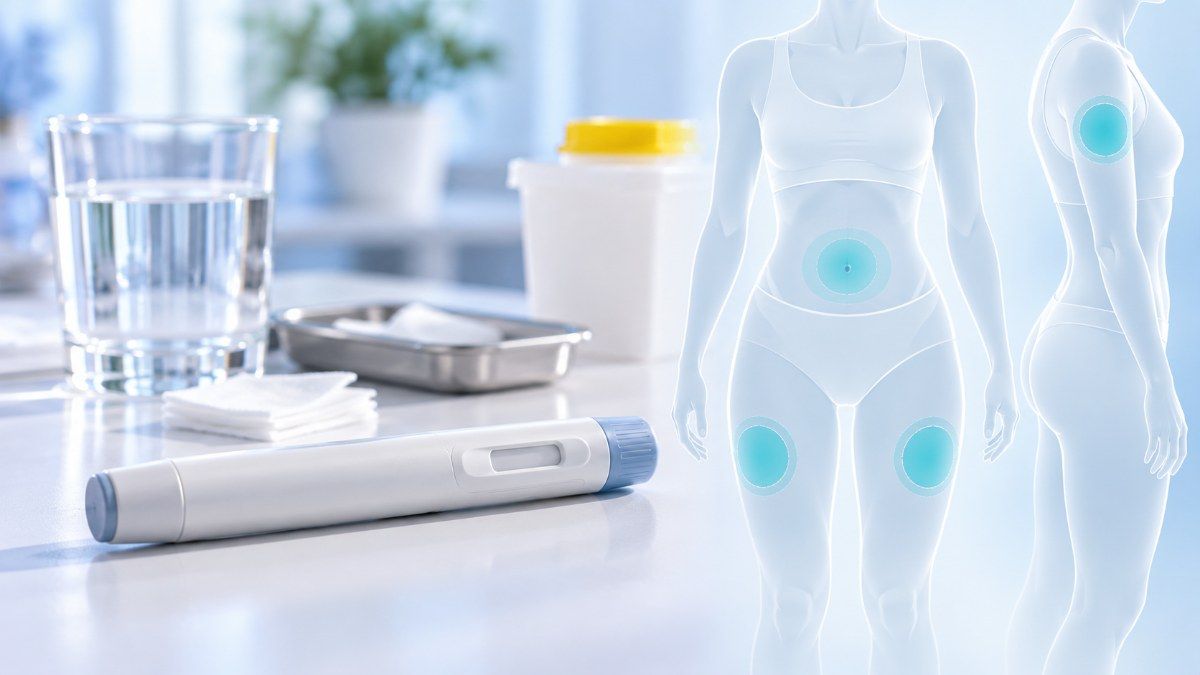
At least 5 cm (2 inches) from the navel, below the ribs and above the hip bones
Front or outer middle third, between knee and hip
Back of the upper arm, the fleshy part between shoulder and elbow
Ease of self-injection
Easiest: visible and easy to pinch
Easy; can be done sitting
Hard to reach and pinch alone
Typical fat layer
Thickest for most people
Moderate
Thinnest for many people
Comfort
Usually least painful
Some find it more sensitive, especially lean people
Fine when someone else injects
Best for
Most people
Lean abdomen, scars, waistband friction, pregnancy-related changes
A partner or carer giving the injection
Watch out for
Stretch marks, scars, the belt line
Areas that rub against clothing
Injecting into muscle if the fat layer is very thin
Why the Stomach Is Popular, and Why It Is Not 'Stronger'
Most people on weekly GLP-1 pens use the abdomen, and the reasons are practical: it is in front of you, you can pinch a fold of skin with one hand, and for most adults it has more fat under the skin than the arm or thigh, which makes it easier to stay out of muscle. A belief has grown online that stomach injections 'work faster' or reduce appetite more because the needle is 'closer to the stomach'. They do not. Semaglutide does not act on the stomach from the outside; it is absorbed from the fat into the bloodstream over two to three days, reaches its peak one to three days after the injection, and then acts on receptors in the brain, pancreas and gut through the circulation. Where the depot sits under the skin changes nothing about where the drug goes. How it works once it is in the blood is covered in how Ozempic works.
Does the Site Affect Side Effects?
Not the gut side effects. Nausea, diarrhea and constipation come from semaglutide's action on the stomach and brain after absorption, so they follow the dose and the dose increases, not the injection site. If a change of site seems to change how you feel, the likelier explanation is timing: the side effects peak a day or two after each injection and settle as you adapt, as described in Ozempic diarrhea and on our Ozempic side effects page. The site can affect local reactions, and those are rare: in the trials, injection-site reactions such as discomfort or redness were reported by 0.2% of people on Ozempic. Bruising, a small lump or a drop of blood are more common in practice and are usually about technique, not the drug.
How to Rotate Injection Sites
Rotation prevents lipohypertrophy, a build-up of firm fatty tissue under the skin that forms when the same spot is injected repeatedly. It is a well-known problem with insulin, which is injected several times a day; with a once-weekly pen the risk is much lower, but the label still asks for a new site each week. A simple plan is to divide the available area into zones and move through them in order, keeping each injection at least a couple of centimetres from the previous one.
An eight-week rotation example
1
Abdomen, right lower
At least 5 cm from the navel
2
Abdomen, left lower
Mirror image of week 1
3
Right thigh, front
Middle third, sitting down
4
Left thigh, front
Mirror image of week 3
5
Abdomen, right upper
Below the ribs
6
Abdomen, left upper
Mirror image of week 5
7
Right thigh, outer
Away from the waistband and pockets
8
Left thigh, outer
Then start again at week 1, shifting each spot slightly
If you prefer to stay in the abdomen every week, that is allowed; simply move to a different spot within it. Keep a note on your phone of which side you used, because a week is long enough to forget.
Injection Mistakes That Matter More Than the Site
- 1Skipping the flow check: the label says to check the flow with each new pen before the first injection, so that a drop appears at the needle tip. Without it, part of the first dose from a new pen can be lost.
- 2Not holding long enough: keep the needle in the skin and the button pressed until the dose counter returns to 0, then count slowly to six before removing it.
- 3Reusing needles: use a new needle every time. A used needle is blunter, more painful, and can block or let air into the pen.
- 4Injecting into scars, stretch marks, moles, bruises or hard skin: absorption there is less predictable.
- 5Injecting through clothing or into skin that has not been cleaned.
- 6Leaving the needle attached between doses: it lets air in and medicine out, and it can affect the dose.
- 7Using a pen that has been frozen or overheated, which is covered in how long Ozempic can be out of the fridge.
What If You Hit a Blood Vessel or Muscle?
A drop of blood or a small bruise after an injection is common and harmless: the needle has nicked a small capillary. Press gently on the spot for a minute. It does not mean you injected into a vein, and the dose is not lost. A deeper sting, or the feeling that the needle went into firmer tissue, may mean the injection reached muscle, which is more likely in lean people and in the upper arm. A single injection into muscle is not dangerous; the drug may be absorbed somewhat faster, which could make side effects a little stronger for a day or two. Do not inject a second dose to make up for it. If you are lean, pinching a fold of skin and using the standard short pen needle keeps the dose in the fat. If a dose was missed or only partly delivered, the rules in what happens if you miss an Ozempic dose apply.
Special Situations
- 1Using insulin as well: Ozempic and insulin can go in the same region, but not right next to each other. Keep the two injections at least a few centimetres apart and never mix them in one syringe.
- 2Very little body fat: the thigh or the abdomen with a pinch is usually safer than the arm.
- 3Larger abdomen with skin folds: inject on a flat area you can see clearly, not inside a fold where moisture collects.
- 4Pregnancy: Ozempic is usually stopped before planned pregnancy; discuss with your prescriber rather than changing sites.
- 5Prefer no needles: since 2026 the same drug is available as Ozempic tablets, described in Ozempic tablets.
When to Talk to Your Doctor
- 1If you see redness that spreads, warmth, swelling, pus or fever after an injection: signs of infection
- 2If firm lumps or dents appear under the skin at your usual sites
- 3If you suspect you injected far more than your dose, such as a dose from the wrong setting; see our Ozempic overdose page
- 4If you have a rash, hives, facial swelling or trouble breathing after an injection: seek urgent care
- 5If your blood sugar or weight response seems to change after switching sites: the site is unlikely to be the cause, and it is worth reviewing dose, adherence and diet, as covered in why you may not be losing weight on Ozempic
The Bottom Line
Stomach, thigh or upper arm: Ozempic works the same from all three, because the label says exposure is similar at each site. Choose the one that is easiest and most comfortable for you, which for most people is the abdomen, and rotate to a new spot every week. The habits that actually protect your dose are the flow check with each new pen, a new needle each time and holding for a slow count of six. How long it takes to see the effect, whichever site you use, is covered in how long Ozempic takes to work, and its use in diabetes in Ozempic for diabetes.
FAQ
Neither is better for results. The Ozempic label states that similar exposure is achieved with injection in the abdomen, thigh or upper arm. Choose the site that is easiest and most comfortable, and rotate each week.
No. Semaglutide is absorbed from the fat into the bloodstream over a couple of days and acts through the circulation. Injecting near the stomach does not make it reach the stomach faster or reduce appetite more.
Not within 5 cm of the navel, not into scars, stretch marks, moles, bruises or hard or tender skin, not into muscle, and not through clothing. Do not inject into a vein or muscle deliberately.
Yes. The label asks for a different injection site each week, even within the same body region, to reduce the risk of lumps under the skin.
Yes, the back of the upper arm is an approved site. It is hard to reach and pinch on your own, so it is most practical when someone else gives the injection.
A drop of blood or a small bruise is common and harmless. Press on the spot for a minute. It does not mean the dose was lost, and you should not inject again.
Sources
- 1Ozempic (semaglutide) injection prescribing information, Novo Nordisk
- 2Ozempic label (sections 2.2, 6.1 and 12.3), FDA structured product label via NDC List
- 3Frid AH et al. New insulin delivery recommendations (injection technique, site rotation, lipohypertrophy), Mayo Clinic Proceedings, 2016
- 4Marso SP et al. Semaglutide and cardiovascular outcomes in patients with type 2 diabetes (SUSTAIN-6), New England Journal of Medicine, 2016
This article summarizes the Ozempic label for general information. Follow the instructions for use supplied with your pen and your prescriber's advice.

Dr. Sheri Tomas
Author
Comments (0)
Be the first to comment on this article.
More articles