Ozempic Tablets Are Here: What Changed When Rybelsus Became Ozempic, Dose by Dose
Rybelsus is now Ozempic tablets: 1.5, 4 and 9 mg replace 3, 7 and 14 mg. Conversion chart, new heart indication, prices, how it differs from the Wegovy pill.
Written by Dr. Sheri Tomas. Updated October 27, 2026.
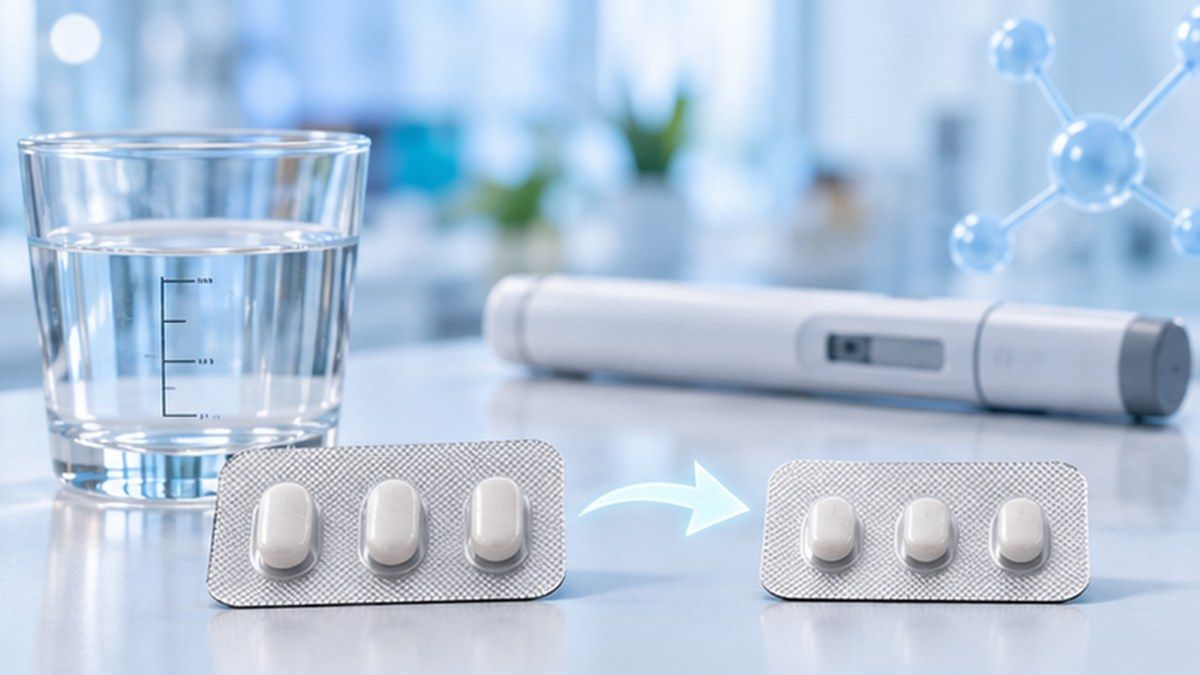
Rybelsus and Ozempic are the same drug, semaglutide, and since 2026 they are also the same brand: on February 4, 2026 the FDA approved Novo Nordisk's request to rename its oral semaglutide tablet from Rybelsus to Ozempic, and the renamed tablets reached US pharmacies on May 4, 2026. What confuses people is that the numbers on the box changed at the same time. Rybelsus came in 3, 7 and 14 mg; Ozempic tablets come in 1.5, 4 and 9 mg. That is not a weaker pill. It is a reformulated tablet that delivers the same amount of drug into the blood from a smaller dose, so a person on Rybelsus 7 mg moves to Ozempic 4 mg and a person on 14 mg moves to 9 mg, with the same effect and the same side effects.
This guide explains what changed and what did not, how the three strengths map onto the old ones, how the tablet compares with the Ozempic injection and with the separate Wegovy pill for weight loss, what the new cardiovascular indication means, what the tablets cost, and what to do if you still have Rybelsus in the cupboard.
Is Rybelsus the Same as Ozempic? The Short Answer
- 1Same molecule: both are semaglutide, a GLP-1 receptor agonist. Rybelsus was the daily tablet; Ozempic was the weekly injection.
- 2Since May 2026 the tablet is sold in the US as Ozempic tablets, in 1.5, 4 and 9 mg strengths. Rybelsus is being phased out in the US and continues under its old name in other countries.
- 3Conversion: Rybelsus 7 mg = Ozempic tablets 4 mg; Rybelsus 14 mg = Ozempic tablets 9 mg. The 1.5 mg tablet is the new starting dose, taking the place of 3 mg.
- 4Taking rules did not change: first thing in the morning, empty stomach, swallowed whole with no more than 4 ounces (120 mL) of plain water, then wait at least 30 minutes before food, drink or other medicines.
- 5New indication: the tablets are approved to reduce the risk of major cardiovascular events in adults with type 2 diabetes at high cardiovascular risk, as well as to control blood sugar.
- 6Not for weight loss: Ozempic tablets are a diabetes medicine. The weight-management semaglutide pill is Wegovy 25 mg, a different product approved in December 2025.
- 7Price: NovoCare self-pay is $149 a month for 1.5 mg, $199 for 4 mg and $299 for 9 mg; commercially insured patients can pay as little as $25.
Why Did Novo Nordisk Rename Rybelsus?
Two reasons, one commercial and one practical. Commercially, Ozempic is one of the best-known drug names in the world and Rybelsus never was; putting the tablet under the Ozempic name tells patients and prescribers at a glance that it is the same drug. Practically, Novo had already developed an improved tablet formulation that absorbs more efficiently, which the FDA had cleared on the basis of bioequivalence and clinical data showing matching efficacy and safety. Launching the new formulation under the new name let the company reset the dose numbers without two products called Rybelsus with different milligram strengths circulating at once. The sequence was: FDA approval of the name change and new strengths on February 4, 2026; US availability from May 4, 2026; and a phased withdrawal of Rybelsus from US distribution over the following months, with insurers telling members by late summer that Rybelsus prescriptions would need to be rewritten. How semaglutide got from a weekly injection to a daily tablet at all is covered in what is Ozempic.
Why Did the Milligram Numbers Change?
Oral semaglutide is a difficult drug to make into a pill, because peptides are digested in the stomach. Rybelsus solved this by combining semaglutide with an absorption enhancer called SNAC, which briefly raises the pH around the tablet so the drug can cross the stomach lining. Only about 1% of the dose reached the blood, which is why Rybelsus needed 14 mg to match an Ozempic injection of around 0.5 to 1 mg. The 2026 formulation improves that absorption, so a 9 mg tablet produces the same blood levels as the old 14 mg, and 4 mg matches 7 mg. The strengths were chosen to be bioequivalent, meaning the same amount of drug in the body, which is why the trials found the same HbA1c reduction and the same side-effect profile. It also means the tablets are not interchangeable milligram for milligram with the old product, and a pharmacist cannot simply substitute a 7 mg Rybelsus tablet for a 4 mg Ozempic tablet without a new prescription.
Rybelsus to Ozempic tablets: what each strength becomes
3 mg
1.5 mg
Starting dose, 30 days
Not a treatment dose; lets the gut adjust. Patients still within their first 30 days on Rybelsus 3 mg usually complete them before switching.
7 mg
4 mg
First maintenance dose
Direct conversion; same blood levels
14 mg
9 mg
Highest maintenance dose
Direct conversion; same blood levels
25 mg
Not a diabetes dose
25 mg is the Wegovy pill for weight management, a separate product; a 25 mg Ozempic tablet for diabetes is under FDA review with a decision expected by the end of 2026
Ozempic Tablets vs Ozempic Injection vs Wegovy Pill
There are now three semaglutide products a person might be handed, and two of them are called Ozempic. The injection is the weekly pen, approved for type 2 diabetes, cardiovascular risk reduction in people with established heart disease, and slowing kidney disease in people with diabetes and chronic kidney disease. The tablets are the daily pill for type 2 diabetes with a cardiovascular indication of their own. The Wegovy pill is the daily 25 mg tablet approved in December 2025 for chronic weight management, using the same improved formulation at a much higher dose. They share the warnings and the gut side effects, and they differ in what they are for, how much drug they deliver and what they cost.
The three semaglutide products compared (US, October 2026)
Form
Weekly injection, multi-dose pen
Daily tablet
Daily tablet
Strengths
0.25, 0.5, 1, 2 mg weekly
1.5, 4, 9 mg daily
1.5, 4, 9, 25 mg daily (escalation to 25 mg)
Approved for
Type 2 diabetes; cardiovascular risk reduction (established disease); chronic kidney disease in diabetes
Type 2 diabetes; cardiovascular risk reduction in diabetes at high cardiovascular risk
Chronic weight management
Typical HbA1c reduction
1.5 to 2.2 points
1.0 to 1.4 points at 9 mg (former 14 mg data)
Not a diabetes product
Typical weight loss
4 to 7 kg in diabetes trials
2 to 4 kg in diabetes trials
About 13 to 14% of body weight at 25 mg
Taking rules
Any time, with or without food
Fasting, 4 oz water, wait 30 min
Fasting, 4 oz water, wait 30 min
Self-pay price (NovoCare)
$349 (0.25 to 1 mg), $499 (2 mg)
$149 / $199 / $299 by strength
$149 to $299 by strength
Former name
Rybelsus
The full comparison between branded Ozempic and other semaglutide, including compounded versions, is in Ozempic vs semaglutide. The weight-loss question, and why Ozempic in either form is not the product for it, is covered in is Ozempic approved for weight loss.
What the New Cardiovascular Indication Means
Rybelsus was approved for blood sugar only. The 2026 label for Ozempic tablets adds reduction of major adverse cardiovascular events, heart attack, stroke and cardiovascular death, in adults with type 2 diabetes at high cardiovascular risk, covering both people who have already had an event and people who have risk factors but no event yet. The evidence comes from the SOUL trial, a 9,650-person outcomes study of oral semaglutide published in 2025, which found a 14% relative reduction in major cardiovascular events over about four years. That is a smaller effect than the 26% seen with the injection in SUSTAIN-6, but in a broader and lower-risk population, and it moves the tablet from a glucose drug to a drug a cardiologist might recommend. For people who will not inject, it closes most of the gap with the pen. The injection still holds the kidney indication on its own.
How to Take Ozempic Tablets
The rules are the same as for Rybelsus and they matter more than for almost any other pill, because the absorption enhancer only works in an empty, nearly dry stomach. Take the tablet when you wake, before anything else. Swallow it whole with no more than 4 ounces of plain water; do not split, crush or chew it. Wait at least 30 minutes before eating, drinking anything else or taking other medicines, including thyroid tablets and vitamins. Taking it with food or a full glass of water does not make it dangerous; it makes it not work, because far less drug is absorbed. If you miss a day, skip it and take the next day's tablet as usual; do not double up. Start at 1.5 mg for 30 days, then 4 mg; increase to 9 mg after at least 30 days if more glucose lowering is needed. Expect the usual semaglutide gut effects in the first weeks of each step; our guide to Ozempic diarrhea applies equally to the tablet.
Switching From Rybelsus to Ozempic Tablets
- 1You need a new prescription. Pharmacies cannot substitute, because the strengths are different numbers; existing prior authorizations for Rybelsus generally transfer, but check with your plan.
- 2Rybelsus 7 mg becomes Ozempic tablets 4 mg; 14 mg becomes 9 mg. No re-titration is needed; take the equivalent dose the day after your last Rybelsus tablet.
- 3If you are in your first 30 days on Rybelsus 3 mg, most prescribers have you finish the month, then move to Ozempic tablets 4 mg.
- 4Finish or dispose of leftover Rybelsus as your prescriber advises; it is not unsafe, but mixing the two products invites dose errors.
- 5Expect no change in effect or side effects. If anything feels different in the first weeks, the likeliest cause is a change in how you are taking it, not the drug.
- 6Outside the US, Rybelsus continues under its own name with the old strengths; travellers should carry the prescription label to avoid confusion.
Are the Side Effects Any Different?
No. The tablets carry the same label warnings as the injection: the boxed warning about thyroid C-cell tumours in rodents, pancreatitis, gallbladder disease, dehydration-related kidney injury, low blood sugar when combined with insulin or sulfonylureas, diabetic retinopathy complications, and the precaution about delayed stomach emptying before anaesthesia. The common effects are nausea, diarrhea, constipation, abdominal pain and reduced appetite, and in the oral trials they were somewhat less frequent at 9 mg than with the 1 mg injection, because the blood levels are lower. The full list, with trial frequencies, is on our Ozempic side effects page.
Who Should Consider the Tablet, and Who the Injection
The tablet suits people with type 2 diabetes who will not inject, who travel without a fridge, or who prefer a daily routine to a weekly one. It costs less at self-pay prices and now carries a cardiovascular indication. The injection suits people who need the stronger glucose and weight effect of the 1 mg and 2 mg doses, people with chronic kidney disease, where only the injection has the indication, and people who struggle with the fasting rule, which is the single most common reason the tablet underperforms in practice. Neither is for weight loss alone. People with diabetes choosing between them should read Ozempic for diabetes; the mechanism they share is in how Ozempic works.
What Do Ozempic Tablets Cost, and Will Insurance Pay?
The list price is the same as the injection, about $1,027 a month, and Novo has announced that list prices across its semaglutide products fall to $675 in January 2027. Almost nobody pays list. The NovoCare self-pay program charges $149 a month for 1.5 mg, $199 for 4 mg and $299 for 9 mg, available without insurance. For commercially insured patients the savings card brings the copay to as little as $25 for up to a three-month fill. Insurance coverage follows the diabetes diagnosis: plans that covered Rybelsus cover Ozempic tablets, and plans are moving members over as the old product leaves the market. Medicare Part D covers the tablets for diabetes as it did Rybelsus. The pricing landscape, including GoodRx and what changes in 2027, is in how much Ozempic costs per month and does insurance cover Ozempic.
When to Talk to Your Doctor
- 1If you are still taking Rybelsus: ask for the Ozempic tablets prescription at the matching strength before supplies run out
- 2If you take levothyroxine or other morning medicines: they need to be scheduled around the 30-minute fasting window
- 3If you have heart disease or several risk factors: ask whether the new cardiovascular indication changes your plan
- 4If you have chronic kidney disease: the injection, not the tablet, carries the kidney indication
- 5If you want semaglutide for weight loss without diabetes: that is Wegovy, pill or injection, not Ozempic tablets
The Bottom Line
Rybelsus and Ozempic have always been the same drug. Since May 2026 they are the same brand too: Ozempic tablets in 1.5, 4 and 9 mg replace Rybelsus 3, 7 and 14 mg, with better absorption, identical effect, a new cardiovascular indication and lower self-pay prices. The conversion is simple, 7 becomes 4 and 14 becomes 9, and the rules for taking it have not changed. What has not changed either is the purpose: Ozempic tablets are for type 2 diabetes, and the semaglutide pill for weight loss is called Wegovy. We track label changes and launches in Ozempic news.
FAQ
Yes. Both are semaglutide. Rybelsus was the daily tablet and Ozempic the weekly injection. In 2026 the tablet was renamed Ozempic tablets in the US, so both the pill and the injection are now sold under the Ozempic name.
The FDA approved its renaming to Ozempic tablets on February 4, 2026, with new strengths of 1.5, 4 and 9 mg replacing 3, 7 and 14 mg. The new tablets launched on May 4, 2026 and Rybelsus is being withdrawn from US distribution. It remains available under its old name in other countries.
Yes. The 2026 tablet absorbs more efficiently, so 4 mg produces the same blood levels as the old 7 mg, and 9 mg matches 14 mg. The effect and side effects are the same.
Same drug, different products. Ozempic tablets (1.5, 4, 9 mg) are for type 2 diabetes. The Wegovy pill escalates to 25 mg and is approved for chronic weight management. They are not interchangeable and are priced and covered differently.
For blood sugar, the 9 mg tablet is roughly comparable to the 0.5 to 1 mg injection, with somewhat less weight loss. The 2 mg injection and the kidney indication remain injection-only. The tablet only works if taken fasting with a small amount of water.
NovoCare self-pay prices are $149 a month for 1.5 mg, $199 for 4 mg and $299 for 9 mg. With commercial insurance the savings card lowers the copay to as little as $25. The list price is about $1,027 and drops to $675 in January 2027.
Sources
- 1Ozempic (semaglutide) tablets prescribing information, 2026, U.S. Food and Drug Administration
- 2Ozempic recognized as proprietary semaglutide treatment for diabetes replacing Rybelsus, myMatrixx, February 2026
- 3Novo Nordisk rebrands Rybelsus as Ozempic, HCPLive, February 2026
- 4Taking Rybelsus? How to switch to the Ozempic pill, GoodRx, June 2026
- 5McGuire DK et al. Oral semaglutide and cardiovascular outcomes in high-risk type 2 diabetes (SOUL), New England Journal of Medicine, 2025
- 6Rybelsus discontinued, to be replaced by Ozempic tablets, Priority Health provider notice, August 2026
- 7Ozempic (semaglutide) injection prescribing information, Novo Nordisk
Product details are current as of October 2026 and may change; check the current label and your pharmacy.

Dr. Sheri Tomas
Author
Comments (0)
Be the first to comment on this article.
More articles