Does Ozempic Cause Bone Loss? What the Research Shows So Far
Ozempic's label lists no bone side effect, but trials show slight hip and spine loss with weight loss. Fracture data, risk groups and how to protect bone.
Written by Dr. Sheri Tomas. Updated November 4, 2026.
The Ozempic prescribing label does not list bone loss, low bone density or fractures as a side effect, but the research so far is not fully reassuring either. Small trials of semaglutide, the active ingredient in Ozempic, found slight drops in bone mineral density (BMD, a measure of how much mineral is packed into bone) at the hip and spine, and those drops appear to track the amount of weight lost rather than a direct effect of the drug. Studies of actual fractures point in both directions: in people with type 2 diabetes, GLP-1 drugs were linked to fewer fractures, while in older adults and people without diabetes some observational data suggest more. The label for Wegovy, a higher dose of the same molecule, notes that in its large heart outcomes trial, people aged 75 and older reported more hip and pelvic fractures than those on placebo. Below, density and fracture studies are covered separately, as of November 2026.
Does Ozempic Cause Bone Loss? The Short Answer
- 1Ozempic label: no warning or listed side effect for bone loss, osteoporosis or fractures.
- 2Wegovy label: in the SELECT trial, people 75 and older reported more hip and pelvic fractures than on placebo.
- 3Bone density: small semaglutide trials found slight hip and spine BMD loss, about the size expected from the weight lost.
- 4Fractures: lower risk in several type 2 diabetes cohorts; a possible higher risk in older adults and in people without diabetes.
- 5Protection: protein, regular strength training and, for people at risk, a DXA bone scan are recommended in a 2025 joint advisory.
- 6Unknown: whether any bone lost recovers after stopping; we found no data on this.
Is Bone Loss Listed on the Ozempic Label?
No. The current Ozempic prescribing information (revised May 2026) does not mention fractures, bone density or osteoporosis in its warnings, its list of adverse reactions or its clinical study results. The word 'bone' appears only in sections describing animal studies. Ozempic is approved for type 2 diabetes, as described in Ozempic for diabetes.
The Wegovy label is different. Wegovy contains the same molecule at a higher weekly dose (2.4 mg) and is approved for weight management. Its label states that in the SELECT cardiovascular outcomes trial, which enrolled more than 17,600 adults, 'patients aged 75 years and older reported more fractures of the hip and pelvis on WEGOVY than on placebo.' The differences between the two products are covered in Ozempic vs Wegovy, and how the brand names relate to the generic drug is explained in Ozempic vs semaglutide.
What Happened to Bone Density in Semaglutide Studies?
The most detailed semaglutide bone study is a 2024 Danish trial by Hansen and colleagues. It gave 64 adults at increased fracture risk (most were postmenopausal women, average age 63, with low bone density or a recent fracture) either semaglutide 1.0 mg weekly or placebo for 52 weeks. Bone density did fall slightly more with semaglutide: by 0.018 g/cm² at the lumbar spine and 0.020 g/cm² at the total hip compared with placebo, with no difference at the femoral neck (the top of the thigh bone). The semaglutide group lost 6.8 kg more, and the authors attributed the bone changes to that weight loss.
A 2025 pilot trial in 20 adults aged 65 and older (average age about 73) found no difference in whole-body bone density after 20 weeks between semaglutide plus lifestyle advice and lifestyle advice alone, though the semaglutide group lost more weight (5.3% against 0.89%).
A 2026 retrospective study by Liu and colleagues compared 255 people taking semaglutide or tirzepatide with 255 matched people not taking them; most were women around 64 years old, followed for a median of 17 months. Hip bone density fell by a similar amount in both groups overall. In people without diabetes, however, users lost somewhat more total hip density than controls (1% against 0.6%). The large STEP 1 weight-loss trial ran a body scan substudy in 140 participants, but we could not find a published bone density result from it.
Bone Density Studies at a Glance
Studies measuring bone mineral density with GLP-1 drugs
Hansen 2024 (semaglutide 1.0 mg)
64 adults at increased fracture risk; mostly postmenopausal women, mean age 63
Randomized vs placebo, 52 weeks
Spine BMD −0.018 g/cm² and total hip −0.020 g/cm² vs placebo; femoral neck no difference; weight −6.8 kg vs placebo
Dinkla 2025 (semaglutide)
20 adults aged 65+, mean age 72.7
Pilot randomized trial, 20 weeks
No difference in whole-body BMD (p=0.77); weight −5.3% vs −0.89%
Liu 2026 (semaglutide or tirzepatide)
255 users vs 255 matched controls; 92% female, mean age 64
Retrospective, median 17 months
Hip BMD fell similarly overall; without diabetes, total hip −1% vs −0.6%
Iepsen 2015 (liraglutide 1.2 mg)
37 women with obesity after about 12% diet weight loss
Randomized, 52 weeks
Bone mineral content fell in controls but not significantly with liraglutide (difference 27 g)
Jensen 2024, S-LiTE (liraglutide)
195 adults after an 8-week diet
Randomized, 52 weeks
Liraglutide plus exercise: no significant hip or spine loss vs placebo; liraglutide alone lost more than exercise alone
Is It the Drug or the Weight Loss?
Most of the evidence points to weight loss as the main driver. Bone adapts to the load it carries, so it tends to lose some density when weight falls. A 2015 review of 41 studies found that diet-induced weight loss lowered total hip bone density by about 0.010 to 0.015 g/cm² over 6 to 24 months, with no significant change at the spine. That is in the same range as the hip change in the Hansen semaglutide trial.
The Look AHEAD lifestyle study found greater hip loss in men, but not women, at year 8 and beyond. A 2026 trial in adults aged 65 to 85 (UPLIFT) found that the more weight people lost, the more hip density they lost, and eating more protein (1.2 g/kg a day) did not significantly protect bone density on its own. A 2025 joint nutrition advisory from four obesity and lifestyle medicine societies states that weight loss of 14% or more achieved rapidly, over three to four months, 'is associated with significant bone loss.' Because Ozempic can produce substantial weight loss, as described in Ozempic for weight loss, the same principle applies.
The drug may also have effects of its own. In the Hansen trial a blood marker of bone breakdown rose with semaglutide, while in an older liraglutide study a marker of bone formation rose by 16%. But the human trials so far are small and cannot cleanly separate a drug effect from a weight effect.
Does Ozempic Increase Fracture Risk?
Fractures matter more than density. Here the evidence splits by population, and almost all of it is observational: it can show links, not prove cause.
Fracture studies with GLP-1 drugs
Hamad 2026, JAMA Network Open
About 134,000 adults aged 50 to 90 with type 2 diabetes
Observational; GLP-1 drugs vs DPP-4 inhibitors
21% lower risk of fragility fracture
Noreña, ENDO 2026 (not peer reviewed)
59,879 adults with type 2 diabetes
Observational; semaglutide vs other diabetes or weight drugs
HR 0.85 (0.77 to 0.93), lower risk
Mostafa and Alrasheed 2024, network meta-analysis
13 cohorts, about 1.06 million people with type 2 diabetes
Pooled observational data
About 60% lower fracture risk (no confidence intervals in abstract)
Kasher Meron, WCO 2025 abstract
45,000+ adults aged 65+ with type 2 diabetes, Israel
Observational; GLP-1 drugs vs SGLT2 or DPP-4 inhibitors
Adjusted HR 1.12 (1.03 to 1.23), higher risk
Constantine 2026, J Am Acad Orthop Surg
33,210 matched pairs without diabetes, overweight or obesity
Observational; GLP-1 users vs non-users
1-year fracture 3.05% vs 2.61% (OR 1.19); OR 4.99 in ages 78 to 88
In short, diabetes cohorts mostly show fewer fractures, while studies in older adults and people without diabetes show the opposite. Two results are conference abstracts not yet fully peer reviewed.
Why Do Results Differ With and Without Diabetes?
The studies compare different people against different drugs. In the diabetes cohorts, GLP-1 users were compared with people taking other diabetes medicines, so the result reflects how GLP-1 drugs stack up against those alternatives rather than against no treatment. Researchers have not settled why the benefit seems confined to diabetes. In the Hamad study, the lower fracture risk appeared only in people with type 2 diabetes.
People without diabetes who take GLP-1 drugs are usually doing so for weight loss and tend to lose more weight, which loads the skeleton less. The Liu study found extra hip density loss only in its non-diabetic group, and the Constantine study found higher fracture rates in non-diabetic users. These signals need confirmation in randomized trials.
Are Older Adults and Postmenopausal Women at Higher Risk?
The groups with the most reason for caution are those who already have weaker bones. The Wegovy label's fracture note concerns adults aged 75 and older; the Constantine study found the largest relative increase in people aged 78 to 88; and the Kasher Meron abstract found a modest increase in adults over 65 with diabetes. Postmenopausal women lose bone naturally as estrogen falls, and they made up 86% of the Hansen trial.
Losing muscle along with fat matters too, because weaker muscles raise the risk of falls. Changes in appearance that come with rapid weight and muscle loss are covered in Ozempic hands, feet and neck and Ozempic face.
Can Strength Training Protect Your Bones on a GLP-1?
The best evidence comes from liraglutide, an older drug in the same class. In the S-LiTE trial (2024), 195 adults first lost weight on a diet, then spent a year on liraglutide, exercise, both, or placebo. People who combined liraglutide with exercise did not lose significantly more hip or spine density than the placebo group. People on liraglutide alone lost more than those who only exercised. A smaller 2015 trial found that liraglutide after diet weight loss helped preserve bone mineral content compared with no drug. We found no completed trial of semaglutide plus exercise with bone results as of November 2026.
How Much Protein, Calcium and Vitamin D Do You Need on Ozempic?
The 2025 joint advisory from the American College of Lifestyle Medicine, the American Society for Nutrition, the Obesity Medicine Association and The Obesity Society (Mozaffarian and colleagues) gives the clearest guidance. It notes the standard protein recommendation of 0.8 g per kilogram of body weight a day and proposes 1.2 to 1.6 g/kg a day during active weight loss. For a 90 kg (about 200 lb) adult, that is roughly 108 to 144 grams of protein a day. It recommends strength training at least three times a week plus 150 minutes of moderate aerobic activity weekly.
For calcium and vitamin D, the advisory suggests considering supplements when intake is at risk of falling short, but it does not give specific amounts for GLP-1 users, and we did not find society guidance that does. Ask your doctor or a dietitian what amount suits you, especially if you eat much less on the medication.
Should You Get a DXA Scan Before or During Ozempic?
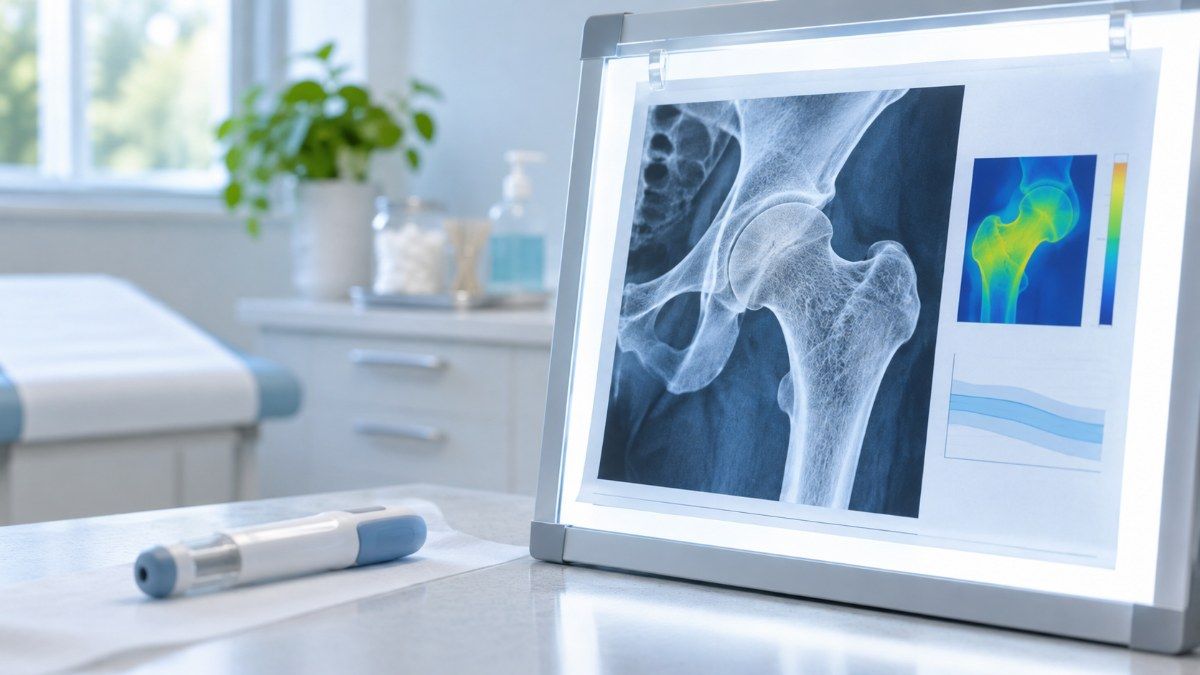
A DXA scan is a low-dose X-ray that measures bone density, usually at the hip and spine. According to the 2025 joint advisory, a DXA scan 'could be considered yearly or every 2 years' for people on GLP-1 therapy, particularly those at risk of bone loss. Whether you need one depends on your age, fracture history and expected weight loss.
When to Talk to Your Doctor
- 1You have osteoporosis, osteopenia (bone density below normal) or have broken a bone in a minor fall.
- 2You are 75 or older, or postmenopausal, and starting or continuing semaglutide.
- 3You are losing weight quickly, or have lost 14% or more of your starting weight.
- 4You take medicines that affect bone, such as long-term steroids.
- 5You have new bone or hip pain, or a fall.
- 6You are eating very little and struggling to reach your protein needs.
Questions to Ask Your Doctor
- 1Should I have a DXA scan before starting, and how often after that?
- 2What is my fracture risk, and does it change the case for semaglutide?
- 3How much protein should I aim for each day, and should I see a dietitian?
- 4Do I need calcium or vitamin D supplements, and at what amount?
- 5What kind of strength training is safe for me?
- 6If I already have osteoporosis, should I be on a bone-protecting medicine as well?
For a wider look at weighing the drug's risks and benefits, see is Ozempic safe?. If you are planning to come off the drug, what happens when you stop taking Ozempic covers weight regain and other changes; we found no studies on whether bone lost during treatment recovers afterward.
The Bottom Line
Ozempic's label lists no bone side effects, and the bone density losses seen in small semaglutide studies are modest and largely explained by weight loss. Fracture data are mixed: reassuring in people with type 2 diabetes, less so in older adults and people without diabetes, and the Wegovy label notes more hip and pelvic fractures in people 75 and older. If you have weak bones or are older, talk with your doctor about a DXA scan, aim for enough protein and keep up strength training while you lose weight.
FAQ
There is no proof that it does. The Ozempic label does not list osteoporosis. Small studies show slight hip and spine density loss that tracks weight loss. A 2026 news-reported conference finding of higher osteoporosis rates has not been fully published, so we cannot assess it.
We found no studies that measured whether bone density recovers after stopping semaglutide. Weight regain after stopping is common, but its effect on bone has not been studied.
They contain the same drug, but Wegovy is used at a higher dose for weight loss. Only the Wegovy label mentions fractures, noting more hip and pelvic fractures in people 75 and older in the SELECT trial.
A 2025 joint advisory suggests considering calcium and vitamin D when your intake may fall short, but gives no specific amounts. Ask your doctor or dietitian how much is right for you.
Possibly, but discuss it with your doctor first. The Hansen trial included people with low bone density and found slight extra hip and spine loss. Your doctor may suggest a DXA scan and bone-protecting treatment.
It likely helps. In a liraglutide trial, people who combined the drug with exercise did not lose significantly more bone than the placebo group. No semaglutide trial has tested this yet.
Sources
- 1Ozempic (semaglutide) injection prescribing information, Novo Nordisk / U.S. FDA, 2026
- 2Wegovy (semaglutide) prescribing information, adverse reactions (label mirror), Novo Nordisk, accessed 2026
- 3Kushner RF et al. Safety profile of semaglutide in the SELECT trial, Obesity, 2025
- 4Hansen MS et al. Effects of semaglutide on bone metabolism and bone mineral density in adults at increased fracture risk, eClinicalMedicine, 2024
- 5Dinkla L et al. Semaglutide plus lifestyle intervention in older adults: a pilot randomized trial, Frontiers in Aging, 2025
- 6Liu Y et al. Bone mineral density in users of semaglutide or tirzepatide, Journal of Clinical Endocrinology and Metabolism, 2026
- 7Iepsen EW et al. GLP-1 receptor agonist treatment increases bone formation and prevents bone loss in weight-reduced obese women, Journal of Clinical Endocrinology and Metabolism, 2015
- 8Jensen SBK et al. Bone health after exercise alone, GLP-1 receptor agonist treatment, or combination treatment (S-LiTE), JAMA Network Open, 2024
- 9Constantine E et al. GLP-1 receptor agonist use and fracture risk in patients without diabetes, Journal of the American Academy of Orthopaedic Surgeons, 2026
- 10Mostafa and Alrasheed. Antidiabetic drugs and fracture risk: a network meta-analysis, Frontiers in Endocrinology, 2024
- 11Mozaffarian D et al. Nutritional priorities to support GLP-1 therapy for obesity: a joint advisory, Obesity, 2025
- 12Weaver AA et al. Weight loss and bone density in older adults (UPLIFT), Osteoporosis International, 2026
- 13Look AHEAD: long-term effect of intentional weight loss on bone density, Archives of Osteoporosis, 2023
- 14GLP-1 drugs linked to lower fracture risk in adults with type 2 diabetes (Hamad CD et al.), UCLA Health news release on JAMA Network Open study, 2026
- 15Review: diet-linked weight loss tied to drop in hip BMD (Zibellini J et al., JBMR), HealthDay, 2015
- 16GLP-1 receptor agonists tied to increased fracture risks in elderly (Kasher Meron, WCO 2025), EMJ Reviews, 2025
- 17Semaglutide and fracture risk in type 2 diabetes (Noreña et al., ENDO 2026), ScienceDaily, 2026
This article summarizes published research for general information and is not medical advice. Two fracture results cited are conference abstracts not yet fully peer reviewed, and most fracture data are observational.

Dr. Sheri Tomas
Author
Comments (0)
Be the first to comment on this article.
More articles