Ozempic for Weight Loss: What People Often Miss
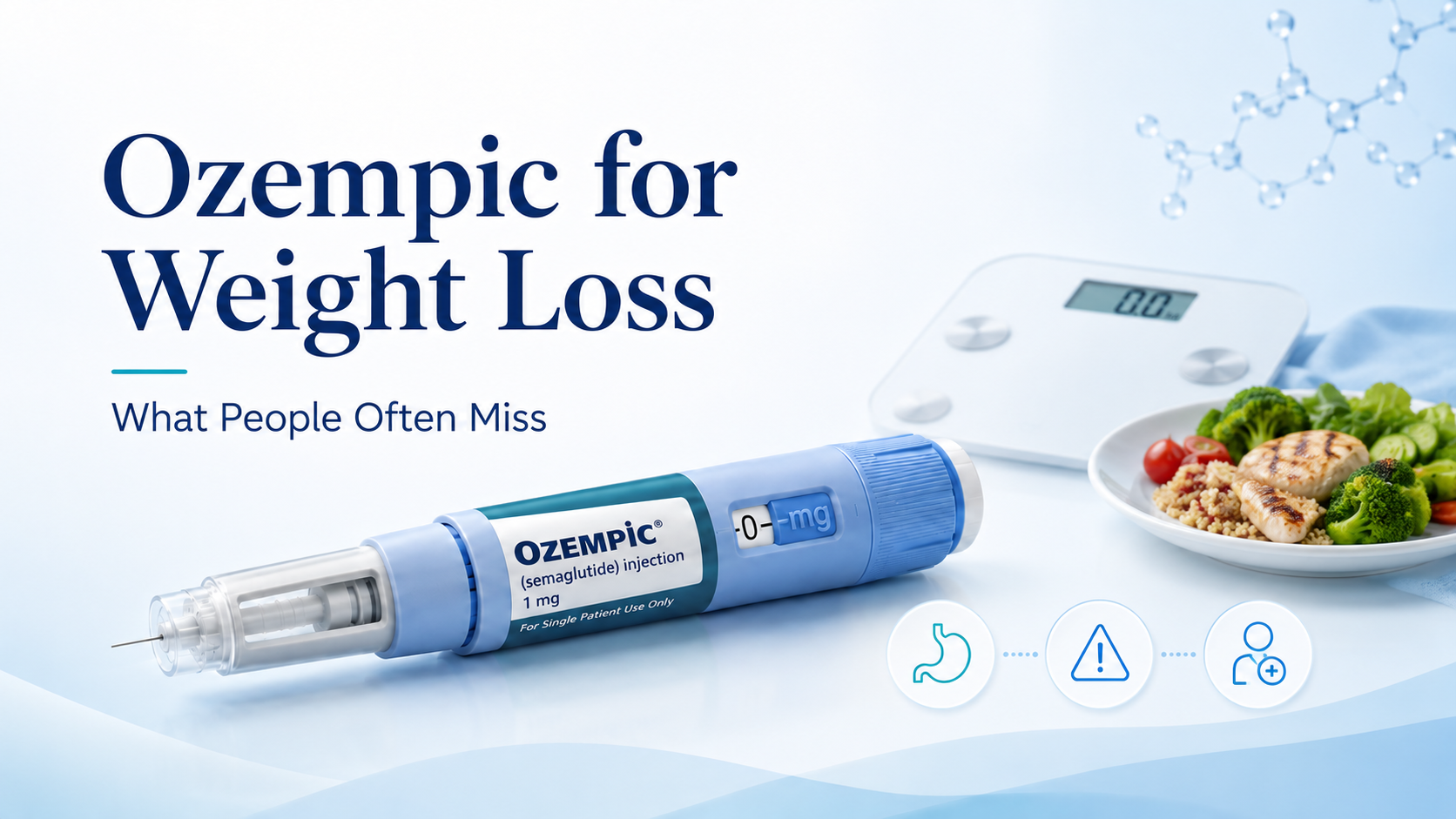
Ozempic causes weight loss by quieting hunger and cravings. How it works, realistic results, whether it's approved for weight loss, and what people miss.
Ozempic helps you lose weight mainly by turning down hunger. Its active ingredient, semaglutide, copies a gut hormone called GLP-1 that tells your brain you're full and slows how fast food leaves your stomach. People on it simply eat less, often without much effort, and in one study they ate about a quarter fewer calories at an all-you-can-eat meal. Ozempic itself is approved for type 2 diabetes, not weight loss; the same drug at a higher dose is sold as Wegovy for that purpose.
That's the short answer. What people often miss is everything around it: how much weight is realistic on Ozempic's doses, why some people barely lose anything, what happens to muscle, and why the results last only as long as the drug does.
How Ozempic Actually Causes Weight Loss
It's not a fat burner and it doesn't speed up your metabolism. It works on the eating side of the equation, through three connected effects.
The three ways Ozempic reduces how much you eat
Appetite signals in the brain
Semaglutide acts on appetite centers in the hypothalamus and brainstem
Less hunger between meals; you think about food less
Slower stomach emptying
Food stays in the stomach longer, especially in the first months
Full sooner and for longer; sometimes nausea if you overeat
Fewer cravings
Changes in reward signaling make high-fat, high-sugar foods less tempting
Less "food noise"; easier to stop at a normal portion
That last point is the one people describe most vividly. In a 2017 study of adults with obesity, semaglutide cut energy intake at a buffet-style lunch by about 24%, reduced cravings, and lowered the preference for fatty, energy-dense foods. Many users describe it as the constant background chatter about food going quiet. For the hormone behind this, see What Is GLP-1?.
Is Ozempic Approved for Weight Loss?
No. Ozempic is FDA-approved for type 2 diabetes, plus heart and kidney protection in people with diabetes. Using it only for weight loss is off-label. Wegovy is the semaglutide brand approved for chronic weight management, and it goes up to a higher dose: 2.4 mg a week, versus Ozempic's maximum of 2 mg. There's also a daily Wegovy pill.
This matters for two practical reasons. Insurance decides coverage by diagnosis, so Ozempic prescribed without diabetes is usually denied. And the Ozempic dose ladder was designed for blood sugar, not weight, so it tops out lower. If weight loss is your main goal, Wegovy, Zepbound or Foundayo are the drugs built for it. Our Ozempic vs Wegovy and insurance guides go into both.
How Much Weight Can You Lose on Ozempic?
It depends heavily on the dose and on whether you have diabetes. People with type 2 diabetes tend to lose less than people without it on the same drug.
Average weight loss with semaglutide in major trials
SUSTAIN FORTE: Ozempic 1 mg, 40 weeks
Type 2 diabetes
About 6 kg (13 lb)
SUSTAIN FORTE: Ozempic 2 mg, 40 weeks
Type 2 diabetes
About 7 kg (15 lb)
STEP 1: Wegovy 2.4 mg, 68 weeks
Obesity without diabetes
About 15% of body weight
Averages hide a wide spread. In STEP 1, about 86% of people on semaglutide 2.4 mg lost at least 5% of their weight, which means roughly 1 in 7 didn't. At the other end, about a third lost 20% or more. Where you land depends on your dose, how long you stay on it, how your body responds, and what you eat once your appetite drops.
What the Timeline Usually Looks Like
Expect a slow start. The first month at 0.25 mg is for getting used to the drug, and many people lose only a few pounds. Weight loss usually picks up once you reach a treatment dose in months two and three, and most of the loss happens over the first year. In STEP 1, weight kept dropping until around week 60 before leveling off. For what's typical early on, see our 6-week results guide. For a week-by-week timeline of when appetite, blood sugar and weight start to change, see our guide.
A plateau after many months isn't the drug "stopping working." Your body has adapted to a lower weight, and appetite and energy use rebalance. That's the point to talk with your prescriber about whether your dose, your eating, or your drug choice should change.
What People Often Miss
This is the part that separates good results from disappointing ones.
- 1Muscle goes too, unless you protect it. A meaningful share of the weight lost on GLP-1 drugs is lean mass. Eating enough protein and doing resistance training two or three times a week helps keep more muscle and makes the weight loss look and feel better.
- 2Eating too little backfires. When appetite drops, some people barely eat. That raises the risk of fatigue, hair shedding, gallstones and muscle loss. The goal is smaller, protein-first meals, not skipping food.
- 3Side effects are part of the deal at first. Nausea, constipation and diarrhea are common during the first weeks and after each dose increase. Rushing the dose makes them worse.
- 4Fast loss can change your face. Rapid weight loss can hollow the cheeks and loosen skin; see Ozempic face for prevention.
- 5Not everyone responds. If you've been on a full dose for several months with little change, that's a reason to reassess, not to double up. Tirzepatide produced more weight loss than semaglutide in a head-to-head trial.
- 6It only works while you take it. When people stop, appetite returns and weight often comes back. See what happens when you stop Ozempic.
Who Shouldn't Use Ozempic for Weight Loss
Beyond the label question, some people shouldn't take semaglutide at all: anyone with a personal or family history of medullary thyroid cancer or MEN 2, and anyone with a serious allergy to it. It's also not for use during pregnancy; the label advises stopping at least two months before trying to conceive. People with a history of pancreatitis, gallbladder disease, an eating disorder or severe stomach problems need a careful conversation with their doctor first.
And skip online "semaglutide" sold without a real prescription. Unregulated vials and counterfeit pens are where many of the worst outcomes come from. Our alternatives guide covers legitimate lower-cost options.
Results vary, and about one in seven people lose less than 5%. If that sounds like you, see why am I not losing weight on Ozempic for the reasons and fixes.
Bottom Line
Ozempic helps people lose weight by quieting hunger and cravings and keeping them full longer, so they eat less without constant willpower. On Ozempic's diabetes doses, average weight loss is modest, around 6 to 7 kg; the higher-dose weight-loss version, Wegovy, averages about 15%. Getting good results means protecting muscle, eating enough, giving the dose time to work, and planning for the long term, because the effect lasts only as long as treatment does.
FAQ
It mimics the gut hormone GLP-1, which reduces appetite in the brain, slows stomach emptying and dampens cravings. People eat less, and weight comes down as a result.
No. Ozempic is approved for type 2 diabetes. The same drug, semaglutide, is approved for weight management under the brand name Wegovy, at a higher maximum dose.
In people with type 2 diabetes, about 6 to 7 kg (13 to 15 lb) on average over 40 weeks at 1 to 2 mg. People without diabetes on Wegovy 2.4 mg lost about 15% of body weight over 68 weeks.
Most people notice reduced appetite within the first weeks, but meaningful weight loss usually starts once they reach a treatment dose, in months two and three.
Common reasons include still being on a low dose, not enough time on treatment, eating calorie-dense foods despite less hunger, or simply being a lower responder. Talk to your prescriber before changing anything.
Not directly. It doesn't speed up metabolism. It reduces how much you eat, and your body uses stored fat, and some muscle, to make up the difference.
Sources
- 1Ozempic (semaglutide) prescribing information, Novo Nordisk
- 2Effects of once-weekly semaglutide on appetite, energy intake, control of eating and food preference in subjects with obesity, Diabetes, Obesity and Metabolism, 2017
- 3Once-Weekly Semaglutide in Adults with Overweight or Obesity (STEP 1), New England Journal of Medicine, 2021
- 4SUSTAIN FORTE results: semaglutide 2 mg vs 1 mg in type 2 diabetes, Novo Nordisk via BioSpace
- 5Tirzepatide as Compared with Semaglutide for the Treatment of Obesity (SURMOUNT-5), New England Journal of Medicine, 2025

Dr. Sheri Tomas
Author
Comments (0)
Be the first to comment on this article.
More articles