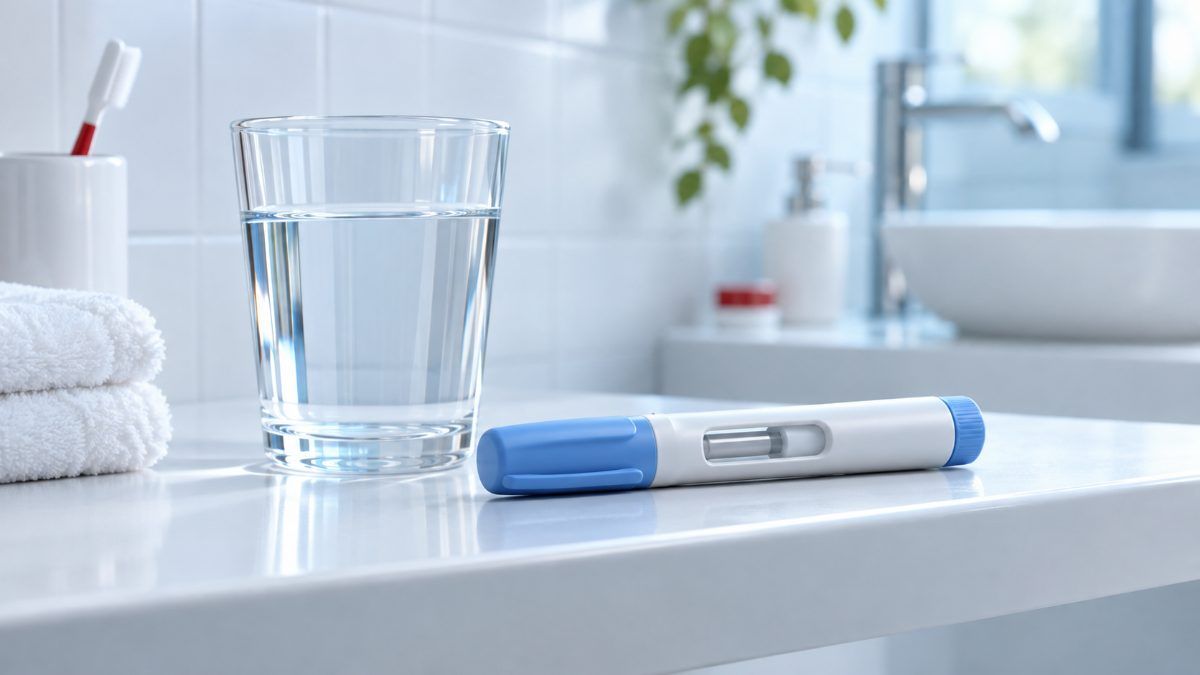
Does Ozempic Make You Pee More? Kidneys, Hydration and What's Normal
Increased urination isn't a listed Ozempic side effect. Why you may pee more, the dehydration and kidney warning, SGLT2 drugs and the FLOW trial.
Written by Dr. Sheri Tomas. Updated November 20, 2026.
Ozempic is not known to make you pee more: increased urination is not listed among the common side effects in its FDA label, and a drug reference from Drugs.com says there is no evidence that Ozempic acts as a diuretic (a medicine that makes the kidneys pass more water). If you are peeing more after starting it, the usual explanations lie elsewhere: drinking more water, another diabetes medicine such as an SGLT2 inhibitor that works by moving sugar into the urine, or blood sugar that is still running high. What the label does warn about is the opposite problem. Nausea, vomiting and diarrhea can drain fluid from the body, and dehydration has led to acute kidney injury in some people, occasionally needing dialysis. At the same time, Ozempic is approved to lower the risk of kidney decline in adults with type 2 diabetes and chronic kidney disease, based on the FLOW trial. This guide explains what is normal, what is not, and when to call a doctor.
Does Ozempic Make You Pee More? The Short Answer
- 1Not a labeled side effect: increased urination is not listed among the common adverse reactions in the Ozempic label.
- 2No diuretic evidence: Drugs.com says there is no evidence Ozempic works as a water pill; drinking more fluid may explain extra trips to the bathroom.
- 3Frequent urination can signal high blood sugar: the NIDDK lists it as a diabetes symptom, along with strong thirst.
- 4SGLT2 inhibitors are different: drugs such as Jardiance put sugar into the urine, and its label lists increased urination in about 3% of users.
- 5The real kidney risk is dehydration: the label warns of acute kidney injury after vomiting, diarrhea or nausea that cause fluid loss.
- 6Kidney protection: in the FLOW trial, Ozempic 1 mg cut the risk of major kidney and heart outcomes by about 24% in people with type 2 diabetes and kidney disease.
What Does the Ozempic Label Say About Urination and the Kidneys?
The current Ozempic prescribing information (revised May 2026) mentions the kidneys in three places. First, Section 1 lists a kidney indication: Ozempic is approved to reduce the risk of sustained decline in eGFR (estimated glomerular filtration rate, a blood-test measure of how well the kidneys filter), end-stage kidney disease and cardiovascular death in adults with type 2 diabetes and chronic kidney disease. Second, Section 5.6 is a warning titled "Acute Kidney Injury Due to Volume Depletion." Third, Section 6.2 lists acute kidney injury among reactions reported after the drug reached the market.
What the label does not contain is just as useful. In the adverse-reaction sections we reviewed, increased urination, polyuria (passing large amounts of urine) and urinary tract infections were not listed among the common adverse reactions. That fits the Drugs.com answer, which says there is no evidence Ozempic has a diuretic action. Drugs.com also notes that only about 3% of a dose leaves the body unchanged in the urine. How the drug works in general is explained in how Ozempic works.
Can Ozempic Cause Dehydration or Kidney Injury?
Yes, indirectly. According to Section 5.6 of the label, there have been postmarketing reports of acute kidney injury, a sudden drop in kidney function, in some cases requiring hemodialysis. Most of these occurred in people who had stomach and gut side effects that led to dehydration, such as nausea, vomiting or diarrhea. The label tells prescribers to monitor kidney function in people with these reactions, especially when starting Ozempic and when the dose is increased. The Wegovy label, for the same molecule, carries the same warning, and its patient Medication Guide puts it plainly: diarrhea, nausea and vomiting may cause a loss of fluids (dehydration), which may cause kidney problems, and you should tell your provider right away if they do not go away.
These side effects are common in the first months. The table below shows how often they occurred in the label's placebo-controlled trials.
Stomach side effects in Ozempic trials (fluid-loss routes behind the kidney warning)
Nausea
6.1%
15.8%
20.3%
Vomiting
2.3%
5%
9.2%
Diarrhea
1.9%
8.5%
8.8%
If diarrhea is the issue, our guide to Ozempic diarrhea covers practical steps. Alcohol can add to fluid loss, as covered in Ozempic and alcohol.
Why Might You Be Peeing More on Ozempic?
If you notice more trips to the bathroom, it is worth working through the likely causes rather than assuming the drug is acting on your bladder. Common ones include:
- 1You are drinking more: many people are told to stay well hydrated on GLP-1 medicines, and more fluid in means more urine out. Drugs.com points to this as a likely explanation.
- 2Another medicine: SGLT2 inhibitors (such as empagliflozin, sold as Jardiance) increase urination by design, and water pills for blood pressure do too. Many people with type 2 diabetes take one of these alongside Ozempic.
- 3High blood sugar: when glucose is high, the body tries to get rid of it through the urine, pulling water with it. Ozempic takes time to bring levels down.
- 4An infection: frequent, urgent or painful urination can be a urinary tract infection, which needs testing.
The first step is simply to check your medicine list and your recent blood sugar readings, then raise it at your next visit, or sooner if you have the warning signs listed later in this article.
Is Frequent Urination a Sign of High Blood Sugar?
Yes. The National Institute of Diabetes and Digestive and Kidney Diseases (NIDDK) lists increased urination and feeling very thirsty among the symptoms of diabetes, along with blurred vision, fatigue and frequent infections such as urinary tract infections or yeast infections. If you started Ozempic because your blood sugar was high, it may not be fully controlled yet, especially in the early weeks while the dose is still being raised.
A practical rule: if frequent urination comes with strong thirst, blurry vision or unusual tiredness, check your glucose if you have a meter, and contact your care team if readings are higher than your target. Feeling drained can have several causes on this medicine, discussed in tired on Ozempic. Where Ozempic fits in a diabetes plan is covered in Ozempic for diabetes.
Ozempic vs SGLT2 Inhibitors: Which One Makes You Pee More?
SGLT2 inhibitors are the diabetes drugs most clearly linked to extra urination. According to the Jardiance (empagliflozin) label, blocking SGLT2 reduces the kidneys' reabsorption of filtered glucose and increases the amount of sugar passed in the urine. Water follows the sugar. In the Jardiance label's pooled trials, increased urination was reported in 3.4% (10 mg) and 3.2% (25 mg) of patients, against 1.0% on placebo. The same label reports more genital yeast infections in women and warns that serious urinary tract infections, including urosepsis and kidney infection (pyelonephritis) requiring hospitalization, have been reported. Ozempic does not work by putting glucose in the urine.
Ozempic compared with an SGLT2 inhibitor (Jardiance) on urination
Drug class
GLP-1 receptor agonist
SGLT2 inhibitor
Sends sugar into urine?
No
Yes, increases urinary glucose excretion
Increased urination in label trials
Not listed among common adverse reactions
3.4% (10 mg) and 3.2% (25 mg) vs 1.0% placebo
Urinary tract infections in label trials
Not listed among common adverse reactions
9.3% (10 mg) and 7.6% (25 mg) vs 7.6% placebo; serious UTI warning
Female genital yeast infections
No rate given in the label sections reviewed
5.4% (10 mg) and 6.4% (25 mg) vs 1.5% placebo
Main fluid-related warning
Acute kidney injury from dehydration after nausea, vomiting or diarrhea
See its own label
If you take both, any extra urination is more likely to come from the SGLT2 inhibitor. Do not stop either medicine on your own; ask your prescriber whether your symptoms fit what is expected.
What Did the FLOW Kidney Trial Show?
FLOW tested Ozempic 1 mg against placebo in 3,533 adults with type 2 diabetes and chronic kidney disease, followed for a median of 41 months. The main outcome combined five events: a sustained drop in eGFR of at least 50%, eGFR falling below 15 (kidney failure range), the need for long-term dialysis or a transplant, death from kidney causes, and death from cardiovascular causes. That combined outcome happened in 18.7% of people on Ozempic and 23.2% on placebo, a hazard ratio of 0.76, or about 24% lower risk. The results were published in the New England Journal of Medicine in 2024 (Perkovic and colleagues); the numbers below are taken from Section 14.3 of the Ozempic label.
FLOW trial results (Ozempic 1 mg vs placebo, median 41 months)
Primary combined outcome
18.7% (331 events)
23.2% (410 events)
0.76 (0.66 to 0.88)
At least 50% sustained eGFR decline
9.3%
12.1%
0.73 (0.59 to 0.89)
eGFR below 15
5.2%
6.2%
0.80 (0.61 to 1.06)
Chronic kidney replacement therapy
4.9%
5.7%
0.84 (0.63 to 1.12)
Kidney death
0.3%
0.3%
0.97 (0.27 to 3.49)
Cardiovascular death
7.0%
9.6%
0.71 (0.56 to 0.89)
Not every part of the combined outcome was clearly reduced on its own: for kidney failure, dialysis and kidney death, the confidence intervals cross 1, so those single results are uncertain. The clearest effects were on large eGFR declines and cardiovascular death. Heart effects are covered in Ozempic and heart health, and blood pressure in does Ozempic lower blood pressure.
Does Ozempic Cause Urinary Tract Infections?
Urinary tract infections are not listed among the common adverse reactions in the Ozempic label sections we reviewed, and we found no trial rate for them. Two things can still make UTIs more likely in people taking Ozempic. Diabetes itself raises the risk of infections, including UTIs, according to the NIDDK. And SGLT2 inhibitors, often taken alongside Ozempic, carry a warning for serious urinary infections. Burning when you pee, a strong urge to go, cloudy or bloody urine, or pain in your side or back should be checked by a clinician; a urine test can confirm an infection.
How Much Water Should You Drink on Ozempic?
The Ozempic label does not give a daily fluid target, and we found no official number for people taking it. The practical aim is to avoid dehydration, especially in the first weeks and after each dose increase, when nausea and vomiting are most likely. If you have heart failure or kidney disease, your doctor may want you to limit fluids, so ask before drinking much more than usual. Signs that you may be getting dehydrated include:
- 1Peeing much less than usual, or dark yellow urine
- 2Dizziness or light-headedness, especially when standing up
- 3Dry mouth and strong thirst
- 4Headache or unusual tiredness
- 5Being unable to keep fluids down for several hours
Small, frequent sips are easier to manage than large amounts when you feel queasy. Headaches on Ozempic have several possible causes, discussed in Ozempic headaches.
When to Talk to Your Doctor
- 1Vomiting or diarrhea that does not stop, or you cannot keep fluids down.
- 2You are peeing much less than usual, or your urine is very dark, especially with dizziness.
- 3Frequent urination with strong thirst, blurred vision or blood sugar readings above your target.
- 4Burning, urgency, cloudy or bloody urine, or pain in your side, back or lower belly.
- 5Swelling in your legs or sudden weight gain if you have kidney disease or heart failure.
- 6Fever or chills with urinary symptoms, which needs prompt care.
What to Do Next: Questions to Ask Your Doctor
If urination changes are bothering you, bring a list of every medicine and supplement you take and a week of blood sugar readings if you have them. These questions can help:
- 1Could one of my other medicines, such as an SGLT2 inhibitor or a water pill, explain the extra urination?
- 2Is my blood sugar controlled well enough, or does my plan need adjusting?
- 3Should I have a urine test to rule out an infection?
- 4When should my kidney function be checked, especially if I have had vomiting or diarrhea?
- 5How much should I drink, given my heart and kidney health?
- 6What should I do if I get a stomach bug while taking Ozempic?
A broader look at weighing the risks is in is Ozempic safe.
The Bottom Line
Ozempic is not a diuretic, and increased urination is not listed among its common side effects. If you are peeing more, look at fluid intake, other medicines such as SGLT2 inhibitors, possible infection and high blood sugar first. The kidney issue to watch on Ozempic is dehydration from nausea, vomiting or diarrhea, which has led to acute kidney injury in some people. For adults with type 2 diabetes and chronic kidney disease, the FLOW trial showed Ozempic lowered the risk of major kidney and heart outcomes, and that use is FDA-approved as of November 2026.
FAQ
Nighttime urination is not listed among the common side effects in the Ozempic label. Drinking more in the evening, an SGLT2 inhibitor or water pill, high blood sugar or an infection are more likely causes. If it is new or getting worse, mention it to your doctor.
Yes, indirectly. Nausea, vomiting and diarrhea are common when starting or raising the dose and can cause fluid loss. The label warns that dehydration has led to acute kidney injury in some people, sometimes requiring dialysis.
For most people, no. Ozempic is approved to reduce the risk of kidney decline in adults with type 2 diabetes and chronic kidney disease, based on FLOW. The risk is acute kidney injury from dehydration, so call your doctor if you cannot keep fluids down.
UTIs are not listed among the common adverse reactions in the Ozempic label. Diabetes itself raises infection risk, and SGLT2 inhibitors taken with Ozempic carry a urinary infection warning.
We found no trial data on urine odor with semaglutide; reports are anecdotal. Dark, strong-smelling urine often means you need more fluids, and a sweet or foul smell, burning or cloudiness should be checked by a doctor.
There is no official fluid target in the label. Aim to stay well hydrated, especially when nauseated, and ask your doctor first if you have kidney disease or heart failure.
Sources
- 1Novo Nordisk. OZEMPIC (semaglutide) injection, prescribing information (revised 05/2026), U.S. Food and Drug Administration, 2026
- 2Novo Nordisk. WEGOVY (semaglutide) injection and tablets, prescribing information (revised 05/2026), U.S. Food and Drug Administration, 2026
- 3JARDIANCE (empagliflozin) tablets, prescribing information (revised 9/2023), U.S. Food and Drug Administration, 2023
- 4NIDDK. Symptoms and causes of diabetes, National Institutes of Health, reviewed 2024
- 5NEJM continuing education summary of the FLOW trial of semaglutide in chronic kidney disease and type 2 diabetes, NEJM Group, 2024
- 6Wegovy prescribing information and Medication Guide (mirror), Drugs.com, 2026
- 7Drugs.com medical answer on whether Ozempic makes you urinate more, Drugs.com, 2026
- 8Drugs.com medical answer on Wegovy, urination and urine smell, Drugs.com
This article is general information based on FDA labels, NIH material and drug references, and it is not a substitute for advice from a doctor. Ozempic and Wegovy are made by Novo Nordisk; FLOW figures are taken from the Ozempic label.

Dr. Sheri Tomas
Author
Comments (0)
Be the first to comment on this article.
More articles