
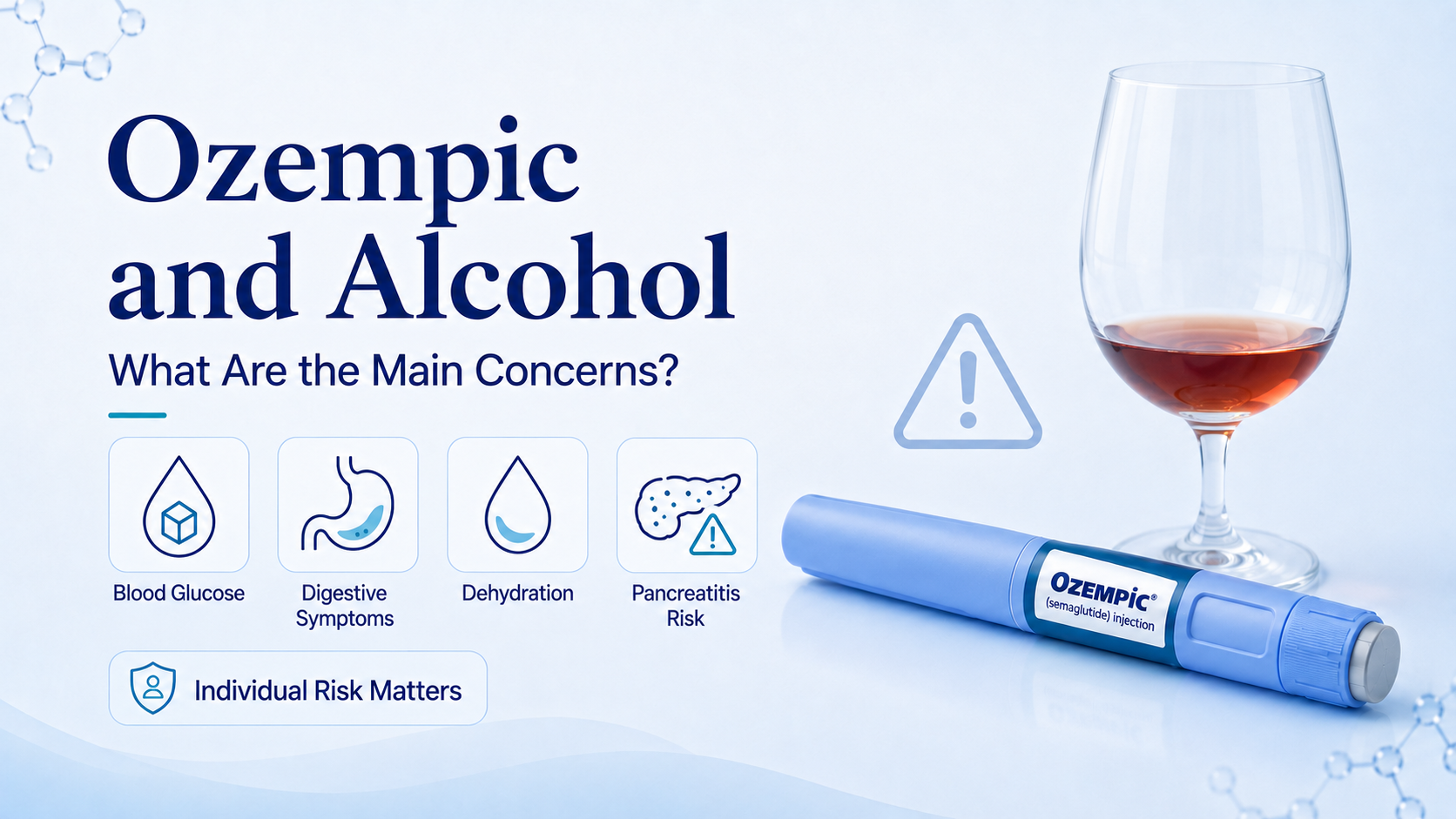
Ozempic and Alcohol: What Are the Main Concerns?
If you are taking Ozempic and wondering whether you can enjoy a drink, the short answer is that alcohol is not explicitly banned, but it is not risk-free for everyone. Because both semaglutide and alcohol influence blood sugar management and gastrointestinal function, drinking can trigger unexpected stomach discomfort or low blood glucose—especially if you take other diabetes medications.
Important: This guide evaluates the potential risks and overlapping effects of alcohol and the once-weekly Ozempic (semaglutide) injection. It is intended for educational purposes and does not replace individualized medical advice from your healthcare provider.
The official Ozempic prescribing information does not list alcohol as a prohibited substance or describe a specific alcohol–semaglutide interaction. However, drinking may complicate blood glucose management, worsen digestive symptoms, or add to individual risks involving dehydration and pancreatitis. The significance of these concerns differs from person to person.
Can You Drink Alcohol While Taking Ozempic?
The Ozempic prescribing information does not establish a universal ban on alcohol. However, that does not mean drinking is appropriate for every patient.
Whether alcohol is advisable depends on your blood glucose control, other diabetes medications, current digestive symptoms, history of pancreatitis, liver health and drinking pattern. Ask your healthcare provider for individualized guidance rather than relying on a universal number of “safe” drinks.
People experiencing persistent vomiting, diarrhea, dehydration or severe abdominal pain should seek medical guidance rather than continue drinking.
1. Alcohol Can Complicate Blood Glucose Management
Alcohol can affect blood glucose in more than one direction. Some alcoholic drinks contain carbohydrates that may initially raise glucose, while alcohol can also interfere with the liver’s ability to release glucose when it is needed. Delayed hypoglycemia may occur several hours after drinking, particularly when alcohol is consumed without adequate food.
Ozempic stimulates insulin release and reduces glucagon secretion in a glucose-dependent manner. Used alone, it generally has a lower risk of hypoglycemia than insulin or sulfonylureas. However, people who use Ozempic together with insulin or a sulfonylurea may face a higher risk of low blood glucose.
Anyone using glucose-lowering medication should follow the monitoring and alcohol guidance provided by their healthcare professional. This is especially important for people with a history of hypoglycemia or difficulty recognizing its symptoms.
For more context, read about Ozempic for type 2 diabetes.
2. Digestive Symptoms and Dehydration
Nausea, vomiting, diarrhea, abdominal pain, and constipation are among the common adverse reactions reported with Ozempic. Semaglutide also delays early post-meal gastric emptying.
Alcohol can irritate the digestive system and may contribute to nausea, reflux, or vomiting in some people. Although direct research on the combination is limited, drinking alcohol while already experiencing gastrointestinal symptoms may make those symptoms more difficult to manage.
Vomiting and diarrhea can also contribute to dehydration. The Ozempic prescribing information warns that dehydration associated with gastrointestinal reactions may lead to kidney problems in some patients.
If you are already experiencing common digestive side effects, discuss alcohol use with your healthcare provider. Our separate guide explains how semaglutide affects digestion.
3. Pancreatitis and Individual Risk Factors
Acute pancreatitis is a serious adverse reaction described in the Ozempic prescribing information. Heavy alcohol use is also an established independent cause of acute and chronic pancreatitis.
However, available evidence does not establish that Ozempic and alcohol interact to multiply pancreatitis risk. People with a history of pancreatitis, heavy alcohol use, gallstones, or high triglycerides should discuss their individual risk with a healthcare professional.
Seek medical attention promptly for severe abdominal pain that does not go away, particularly if it spreads to the back or occurs with vomiting. These can be symptoms of acute pancreatitis.
Alcohol may present additional concerns for people with liver disease, but Ozempic should not be described as routinely placing “strain” on the liver. These conditions require an individualized assessment as part of broader general Ozempic safety considerations.
4. Alcohol Response and Cravings May Change
Some patients report changes in their desire for alcohol while using GLP-1 receptor agonists. A small randomized clinical trial involving 48 adults with alcohol use disorder found that low-dose semaglutide reduced alcohol craving and some, but not all, measures of alcohol consumption.
Another small preliminary study suggested that GLP-1 receptor agonists might delay the rise in breath alcohol concentration and perceived intoxication. These findings are early and should not be used to predict how any individual will respond to drinking.
Semaglutide is not FDA-approved for treating alcohol use disorder, and a delayed feeling of intoxication should not be interpreted as protection from alcohol-related impairment.
Summary of Main Considerations
Summary of Main Considerations
Blood glucose
Alcohol can raise or lower glucose, and delayed hypoglycemia can occur.
Follow the glucose-monitoring and alcohol guidance provided by your healthcare professional.
Digestive symptoms
Ozempic commonly causes gastrointestinal reactions; alcohol may worsen similar symptoms in some people.
Discuss drinking with your provider if nausea, vomiting, diarrhea, or abdominal pain is present.
Dehydration
Vomiting and diarrhea can cause fluid loss and may contribute to kidney problems.
Seek medical guidance if gastrointestinal symptoms persist or make it difficult to keep fluids down.
Pancreatitis
Ozempic carries a pancreatitis warning, while heavy alcohol use is an independent pancreatitis risk factor.
Discuss individual risk, particularly with a history of pancreatitis or heavy drinking.
Alcohol response
Early studies suggest semaglutide may alter craving and the timing of perceived intoxication.
Do not assume the medication makes alcohol safer or use it as an alcohol-treatment strategy.
Sources
- 1Ozempic Injection Prescribing Information — Novo Nordisk
- 2Once-Weekly Semaglutide in Adults With Alcohol Use Disorder — JAMA Psychiatry
- 3Physiological and Perceptual Effects of GLP-1 Receptor Agonists During Alcohol Consumption — Scientific Reports
- 4Pancreatitis: Symptoms and Causes — NIDDK
Dr. Sheri Tomas
Comments (0)
Be the first to comment on this article.
