
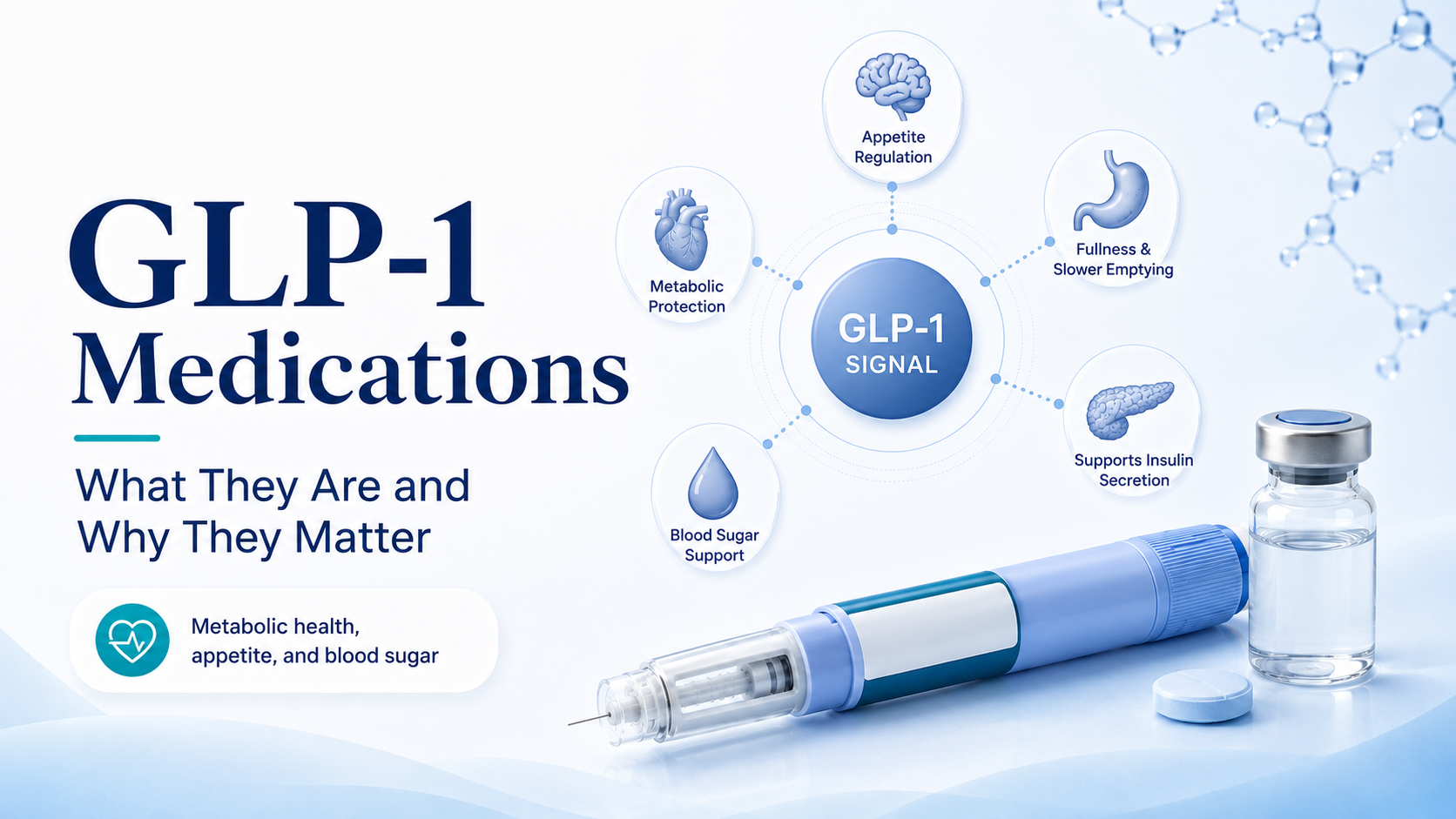
GLP-1 Medications: What They Are and Why They Matter
GLP-1 medications changed the way people talk about diabetes, weight loss, appetite, and metabolic health. They are not just “weight-loss shots” and not just diabetes drugs. This guide explains what GLP-1 medications are, how they work, which drugs belong in the class, why names like Ozempic, Wegovy, Mounjaro, and Zepbound are often discussed together, and why this drug class became so important.
GLP-1 Medications: What They Are and Why They Matter
Last updated: June 29, 2026
GLP-1 medications did not become important because of one viral celebrity headline. They became important because they changed several medical conversations at the same time. For years, many people thought about type 2 diabetes, obesity, heart disease, kidney disease, appetite, and weight loss as separate problems. Blood sugar belonged in one lane. Weight belonged in another. Heart risk belonged somewhere else. Hunger was often treated like a willpower issue instead of a biological signal. GLP-1 medications helped change that. They showed that one drug class could affect blood sugar, appetite, body weight, and, in selected groups, risks connected to the heart, kidneys, and sleep apnea. That does not make them magic. It does not mean they are right for everyone. It does not erase side effects, cost problems, access problems, or the risks of unapproved products. But it does explain why GLP-1 medications became one of the most talked-about drug classes in modern medicine.
Quick Answer: What Are GLP-1 Medications?
GLP-1 medications are prescription drugs that act on the GLP-1 pathway, a hormone system involved in blood sugar control, appetite, fullness, and digestion. Some GLP-1 medications are used for type 2 diabetes. Some are used for chronic weight management. Some have additional approved uses in specific patient groups, such as reducing certain cardiovascular risks. The reason they became so important is simple: GLP-1 medications are not only “diabetes drugs.” They are not only “weight-loss drugs.” They sit at the center of a bigger medical shift: treating metabolic disease through hormone signaling.
What Does GLP-1 Stand For?
GLP-1 stands for glucagon-like peptide-1. It is a hormone your body naturally releases after eating. GLP-1 helps tell the body that food has arrived. It plays a role in insulin release, glucagon regulation, stomach emptying, appetite, and fullness. That is why the GLP-1 pathway matters. It connects food, blood sugar, digestion, and the brain’s appetite signals. GLP-1 medications are designed to imitate or activate part of that natural signaling system for medical treatment. For a deeper hormone-level explanation, see the What Is GLP-1 guide.
What Does GLP-1 Do in the Body?
GLP-1 does several things at once. It can help the pancreas release insulin when blood sugar is elevated. It can reduce glucagon, a hormone that tells the liver to release stored sugar. It can slow how quickly food leaves the stomach. It can help people feel full sooner. It can affect appetite signals in the brain. That combination is why GLP-1 medications became so important. They do not work like a simple stimulant. They do not just “burn fat.” They work through a hormone pathway that affects how the body handles food, sugar, hunger, and fullness.
How Do GLP-1 Drugs Work?
GLP-1 drugs work by activating GLP-1 receptors. These receptors are part of the body’s natural metabolic signaling system. When GLP-1 receptors are activated, the body may respond to meals differently. Blood sugar may be easier to manage. Appetite may decrease. Fullness may last longer. Food may move through the stomach more slowly. For some people, this leads to better glucose control. For some people, it also leads to weight loss. That is why the same drug class became important in both type 2 diabetes and obesity treatment. But the effect is not identical for everyone. Some people respond strongly. Some respond modestly. Some have side effects that make treatment difficult. Some should not use these medications because of medical history, contraindications, or other risks. That is why GLP-1 medications belong in medical care, not casual self-experimentation.
Which Medications Are GLP-1 Drugs?
People often use “GLP-1 medications” as a broad public phrase. Common medications discussed in this category include:
- 1Ozempic;
- 2Wegovy;
- 3Rybelsus;
- 4Victoza;
- 5Saxenda;
- 6Trulicity;
- 7Mounjaro;
- 8Zepbound.
There is one important detail. Not all of these are GLP-1-only medications. Ozempic, Wegovy, and Rybelsus contain semaglutide, a GLP-1 receptor agonist. Victoza and Saxenda contain liraglutide, a GLP-1 receptor agonist. Trulicity contains dulaglutide, a GLP-1 receptor agonist. Mounjaro and Zepbound contain tirzepatide, which acts on both GIP and GLP-1 receptors. It is technically a dual GIP/GLP-1 receptor agonist, but people often include it in the broader GLP-1 conversation. That broader use is common. But if you want to be precise, tirzepatide is GLP-1-related, not GLP-1-only.
Popular GLP-1 Medication Names: What Belongs in the Class?
This is where many people get confused. Some names are brand names. Some are active ingredients. Some are GLP-1 receptor agonists. Some are GLP-1-related but not GLP-1-only. Some are not GLP-1 medications at all. Ozempic contains semaglutide, a GLP-1 receptor agonist. It is approved for type 2 diabetes and is often discussed because some people lose weight while using it. Wegovy also contains semaglutide, but it is used in a different medical context. It is approved for chronic weight management in certain patients, and in 2024 the FDA approved it to reduce the risk of cardiovascular death, heart attack, and stroke in adults with cardiovascular disease and either obesity or overweight. Rybelsus contains oral semaglutide. It is a GLP-1 receptor agonist in pill form and is used for type 2 diabetes. Victoza and Saxenda contain liraglutide, a GLP-1 receptor agonist. Trulicity contains dulaglutide, another GLP-1 receptor agonist. Mounjaro and Zepbound contain tirzepatide. Tirzepatide is not GLP-1-only. It acts on both GIP and GLP-1 receptors, so it is more accurately described as a dual GIP/GLP-1 receptor agonist. Metformin is not a GLP-1 medication. It is a different type of diabetes drug. Jardiance is not a GLP-1 medication either. It contains empagliflozin and belongs to the SGLT2 inhibitor class. The simple version:
- 1Semaglutide, liraglutide, and dulaglutide are GLP-1 receptor agonists.
- 2Tirzepatide is GLP-1-related, but it is dual GIP/GLP-1.
- 3Metformin and Jardiance are not GLP-1 medications.
Why GLP-1 Medications Changed Diabetes Treatment
GLP-1 medications first became important in type 2 diabetes care. The older diabetes conversation often centered on one question: How do we lower blood sugar? That question still matters. But GLP-1 medications expanded the conversation. Instead of only pushing glucose numbers down, they work through meal-related hormone signaling. For many patients with type 2 diabetes, this can mean better blood sugar control with the added possibility of weight loss. That mattered because type 2 diabetes is rarely only about glucose. It often overlaps with weight, blood pressure, cholesterol, cardiovascular risk, kidney disease, fatty liver concerns, sleep apnea, and inflammation. GLP-1 medications became important because they fit into that bigger metabolic picture.
They Made Appetite Feel Biological, Not Moral
This may be the biggest cultural shift. For decades, obesity was often discussed as if it were mainly a willpower problem. Eat less. Move more. Try harder. Stop making excuses. That message was simple. It was also incomplete. GLP-1 medications made many people realize that appetite is not just a personality trait. Hunger, fullness, cravings, food noise, stomach emptying, insulin response, and reward signaling are biological systems. That does not mean lifestyle does not matter. It does. But it does mean appetite can be medically influenced in some people. For patients who spent years feeling blamed for a biology they could not easily control, that was a major change. This is one reason GLP-1 medications became so visible. They did not only change bodies. They changed how people talked about hunger.
They Moved Obesity Treatment Into a New Era
GLP-1 medications became famous because of weight loss. That fame is not random. Older weight-loss medications often had limited effectiveness, difficult side effects, or safety concerns. Bariatric surgery could produce major results, but surgery is not appropriate or accessible for everyone. Newer GLP-1 and GLP-1-related medications created a middle space: prescription medical treatment that could produce clinically meaningful weight loss for some people without surgery. That changed expectations. It also created hype. Some people now talk about GLP-1 medications as if they are a shortcut, a beauty trend, or a universal answer. That is too simple. These are prescription medications. They can cause side effects. They require medical screening and monitoring. They are not cosmetic products. But the reason they became important is real: obesity is a serious chronic condition, and this class gave clinicians a stronger medical tool than many older options.
They Became Bigger Than Weight Loss
The public often focuses on the scale. Medicine is increasingly focused on the outcomes behind the scale. That is where GLP-1 medications became even more important. In 2024, the FDA approved Wegovy to reduce the risk of cardiovascular death, heart attack, and stroke in adults with cardiovascular disease and either obesity or overweight. In 2025, Ozempic received an expanded kidney-related indication for people with type 2 diabetes and chronic kidney disease, reducing risk connected to kidney disease worsening, kidney failure, and cardiovascular death in that population. In 2024, Zepbound became the first FDA-approved medication for moderate to severe obstructive sleep apnea in adults with obesity, to be used with reduced-calorie diet and increased physical activity. These approvals matter because they show the same larger theme: metabolic disease is connected. Weight, blood sugar, heart risk, kidney risk, and sleep apnea often overlap. GLP-1 medications became important because they entered that overlap.
Why the Heart and Kidney Story Matters
Heart disease and kidney disease are major reasons diabetes and obesity become dangerous. A medication that only changes weight can still be useful. A medication that changes weight and also shows benefit in cardiovascular or kidney outcomes for certain patients becomes much more important medically. That does not mean every GLP-1 drug has every benefit. It does not mean every patient gets the same result. It does not mean these medications replace blood pressure care, cholesterol care, kidney monitoring, nutrition, physical activity, or other treatments. But it does mean the class is no longer only about glucose or jeans size. It is about risk. That is why doctors, insurers, researchers, regulators, and patients are paying attention.
Why Sleep Apnea Entered the Conversation
Sleep apnea may seem unrelated at first. It is not. Obstructive sleep apnea is often connected with obesity. Weight loss can improve the condition in some people, although not all sleep apnea is caused by weight. Zepbound’s FDA approval for moderate to severe obstructive sleep apnea in adults with obesity was important because it connected GLP-1-related therapy with a condition many people experience as poor sleep, daytime fatigue, snoring, breathing interruptions, and cardiovascular strain. That does not mean every sleep apnea patient should use Zepbound. It also does not mean people should stop CPAP or other treatment without medical guidance. But it shows why the GLP-1 field became bigger than diabetes and weight loss headlines.
Are GLP-1 Medications Safe?
The honest answer is: they can be appropriate for selected patients, but they are not risk-free. Common side effects often involve the digestive system, including nausea, vomiting, diarrhea, constipation, reduced appetite, and abdominal discomfort. Some people tolerate these medications well. Some struggle with side effects. Some need slower dose changes. Some may not be good candidates at all. Safety depends on the specific medication, dose, medical history, other medications, pregnancy status, gallbladder or pancreas history, kidney function, digestive symptoms, and other personal factors. That is why “Is GLP-1 safe?” is not a yes-or-no question. A better question is: Is this specific GLP-1 medication appropriate for this specific person under medical supervision? That answer belongs with a licensed healthcare professional.
Why the Hype Can Be Dangerous
The hype around GLP-1 medications is not harmless. When a drug class becomes famous, people start flattening the story. They say things like:
- 1“Everyone should be on it.”
- 2“It is just a weight-loss shot.”
- 3“It has no risks.”
- 4“It is cheating.”
- 5“Compounded versions are basically the same.”
- 6“Research versions are fine if they are cheaper.”
- 7“All side effects are exaggerated.”
- 8“All benefits are exaggerated.”
None of those statements is good enough. The reality is more careful. GLP-1 medications can be very helpful for selected patients. They can also cause side effects. Some people may struggle to eat enough protein or maintain muscle during major weight loss. Some people should not use certain medications because of medical history, contraindications, or other risks. And unapproved or poorly regulated products add another layer of risk. The FDA has warned about unapproved GLP-1 products, dosing errors, fraudulent compounded products, salt forms of semaglutide, and products falsely sold as “for research purposes” while being marketed for human use. That matters because the popularity of the class created a market where desperate patients, high prices, shortages, telehealth ads, and gray-market sellers all collided. The more important a drug class becomes, the more important quality, medical supervision, and honest labeling become.
What About GLP-1 Patches, Pills, and Natural GLP-1 Claims?
This is a separate but important part of the GLP-1 conversation. Online, people search for GLP-1 patches, GLP-1 pills, supplements, “natural GLP-1 boosters,” and products that claim to support appetite or metabolism. These should not all be treated as the same thing. An FDA-approved prescription GLP-1 medication is one category. A prescription oral GLP-1 medication, such as oral semaglutide, is another specific category. A supplement, patch, or wellness product marketed around GLP-1 language is different. Most GLP-1 patches sold online should not be assumed to work like Ozempic, Wegovy, Mounjaro, or Zepbound. A supplement that claims to “support GLP-1 naturally” is not the same as a prescription drug that activates GLP-1 receptors. Lifestyle factors such as protein, fiber, sleep, physical activity, and overall metabolic health may influence fullness and glucose-related signals. But natural support is not the same as taking a prescription GLP-1 medication. This article focuses on GLP-1 medications as a drug class. For the broader hormone explanation, see the What Is GLP-1 guide.
What Happens When You Stop Taking GLP-1?
Some people regain weight after stopping GLP-1 medications. That can happen because appetite signals may return, food intake may increase, and the underlying biology of obesity or diabetes may still be present. This is one reason many clinicians describe obesity as a chronic condition. Stopping the medication does not always mean the original biology has disappeared. That does not mean everyone must stay on GLP-1 treatment forever. It does mean stopping should be discussed with the prescribing clinician, especially if the medication is being used for diabetes, weight management, cardiovascular risk, kidney-related risk, or another medical reason.
Are GLP-1 Medications a Cure?
No. They are tools. That distinction matters. GLP-1 medications can help some people manage chronic metabolic disease, but they do not erase the underlying biology for everyone. Weight may return after stopping treatment. Appetite signals may change again. Diabetes, obesity, cardiovascular disease, kidney disease, and sleep apnea may still require long-term care. The best way to understand them is not: “This fixes everything.” A better version is: “This class gives clinicians a powerful tool for conditions that are often connected and difficult to treat.” That is important enough without turning it into a miracle story.
What People Often Miss
People often miss three things. First, GLP-1 medications are not all the same. Ozempic, Wegovy, Rybelsus, Mounjaro, Zepbound, Saxenda, Victoza, and Trulicity have different active ingredients, approved uses, dosing forms, labels, and evidence. Second, the goal is not always weight loss. For some patients, the main goal may be glucose control, cardiovascular risk reduction, kidney-risk reduction, or treatment of an obesity-related condition. Third, appetite suppression can create new problems if nutrition is ignored. Eating much less is not automatically the same as eating well. Protein intake, hydration, micronutrients, resistance training when appropriate, and medical monitoring can matter during major weight loss. That is why GLP-1 treatment should not be treated like a casual wellness trend. It belongs in a medical plan.
Bottom Line
GLP-1 medications became important because they changed the way people think about metabolic disease. They started as diabetes drugs, became famous through weight loss, and then grew into a broader conversation about heart risk, kidney risk, sleep apnea, appetite biology, obesity treatment, and long-term public health. The hype is not the whole story. The backlash is not the whole story either. The clean version is this: GLP-1 medications became important because they showed that blood sugar, appetite, weight, and metabolic risk are connected — and that medicine can sometimes influence those systems in a meaningful way. That is why this drug class matters.
FAQ
What are GLP-1 medications?
GLP-1 medications are prescription drugs that act on the glucagon-like peptide-1 pathway, a hormone system involved in insulin release, glucagon regulation, stomach emptying, appetite, and fullness.
What does GLP-1 stand for?
GLP-1 stands for glucagon-like peptide-1.
What does GLP-1 do?
GLP-1 helps regulate blood sugar, insulin release, glucagon, stomach emptying, appetite, and fullness after eating.
How do GLP-1 drugs work?
GLP-1 drugs activate GLP-1 receptors. This can help with blood sugar control, reduce appetite, slow stomach emptying, and support fullness in some patients.
Are GLP-1 medications only for diabetes?
No. Some GLP-1 medications are approved for type 2 diabetes, some for chronic weight management, and some have additional approved uses in specific patient groups.
Is Ozempic a GLP-1?
Yes. Ozempic contains semaglutide, which is a GLP-1 receptor agonist.
Is Wegovy a GLP-1?
Yes. Wegovy contains semaglutide, a GLP-1 receptor agonist approved for chronic weight management in certain patients and cardiovascular risk reduction in a specific approved group.
Is Mounjaro a GLP-1?
Mounjaro contains tirzepatide, which acts on both GIP and GLP-1 receptors. It is often grouped with GLP-1 medications, but it is technically a dual GIP/GLP-1 receptor agonist.
Is Zepbound a GLP-1?
Zepbound contains tirzepatide, a dual GIP/GLP-1 receptor agonist. It is GLP-1-related but not GLP-1-only.
Is semaglutide a GLP-1?
Yes. Semaglutide is a GLP-1 receptor agonist and is the active ingredient in Ozempic, Wegovy, and Rybelsus.
Is tirzepatide a GLP-1?
Tirzepatide is GLP-1-related but not GLP-1-only. It acts on both GIP and GLP-1 receptors.
Is metformin a GLP-1?
No. Metformin is not a GLP-1 medication. It is a different type of diabetes medication.
Is Jardiance a GLP-1?
No. Jardiance is not a GLP-1 medication. It belongs to a different drug class called SGLT2 inhibitors.
Are GLP-1 medications safe?
They can be appropriate for selected patients, but they are prescription medications with risks and side effects. Safety depends on the specific drug, medical history, dose, monitoring, and product quality.
What are common GLP-1 side effects?
Common side effects often include nausea, vomiting, diarrhea, constipation, reduced appetite, and abdominal discomfort.
Do GLP-1 patches work?
Most GLP-1 patches sold online are not the same as prescription GLP-1 medications. They should not be assumed to work like Ozempic, Wegovy, Mounjaro, or Zepbound.
Do GLP-1 pills work?
Some prescription GLP-1 medications are available as pills, such as oral semaglutide. But supplements or online “GLP-1 pills” are not automatically real GLP-1 medications.
Can you increase GLP-1 naturally?
Diet, fiber, protein, physical activity, sleep, and metabolic health may influence fullness and glucose-related signals, but natural GLP-1 support is not the same as taking a prescription GLP-1 medication.
What happens when you stop taking GLP-1?
Some people regain weight or notice appetite returning after stopping GLP-1 treatment. Stopping should be discussed with the prescribing clinician.
Are compounded GLP-1 medications the same as FDA-approved drugs?
No. The FDA states that compounded drugs are not FDA-approved and are not reviewed by the agency for safety, effectiveness, or quality before marketing.
Why did GLP-1 medications become so important?
They became important because they connect several major health areas: blood sugar, appetite, weight, cardiovascular risk, kidney risk, and obesity-related conditions.
Sources
- 1FDA — Wegovy cardiovascular risk reduction approval: https://www.fda.gov/news-events/press-announcements/fda-approves-first-treatment-reduce-risk-serious-heart-problems-specifically-adults-obesity-or
- 2FDA — Zepbound approval for obstructive sleep apnea: https://www.fda.gov/news-events/press-announcements/fda-approves-first-medication-obstructive-sleep-apnea
- 3FDA — Concerns with unapproved GLP-1 drugs used for weight loss: https://www.fda.gov/drugs/postmarket-drug-safety-information-patients-and-providers/medications-containing-semaglutide-marketed-type-2-diabetes-or-weight-loss
- 4National Kidney Foundation — FDA approval of Ozempic for type 2 diabetes and chronic kidney disease: https://www.kidney.org/news-stories/fda-approves-ozempic-type-2-diabetes-and-chronic-kidney-disease
- 5American Diabetes Association — Standards of Care in Diabetes 2026 overview: https://diabetes.org/newsroom/press-releases/american-diabetes-association-releases-standards-care-diabetes-2026
- 6Nature Reviews Drug Discovery — GLP-1-based therapies for diabetes, obesity and beyond: https://www.nature.com/articles/s41573-025-01183-8
- 7Nature Medicine — The expanding landscape of GLP-1 medicines: https://www.nature.com/articles/s41591-025-04124-5
Editorial Team
Comments (0)
Be the first to comment on this article.
