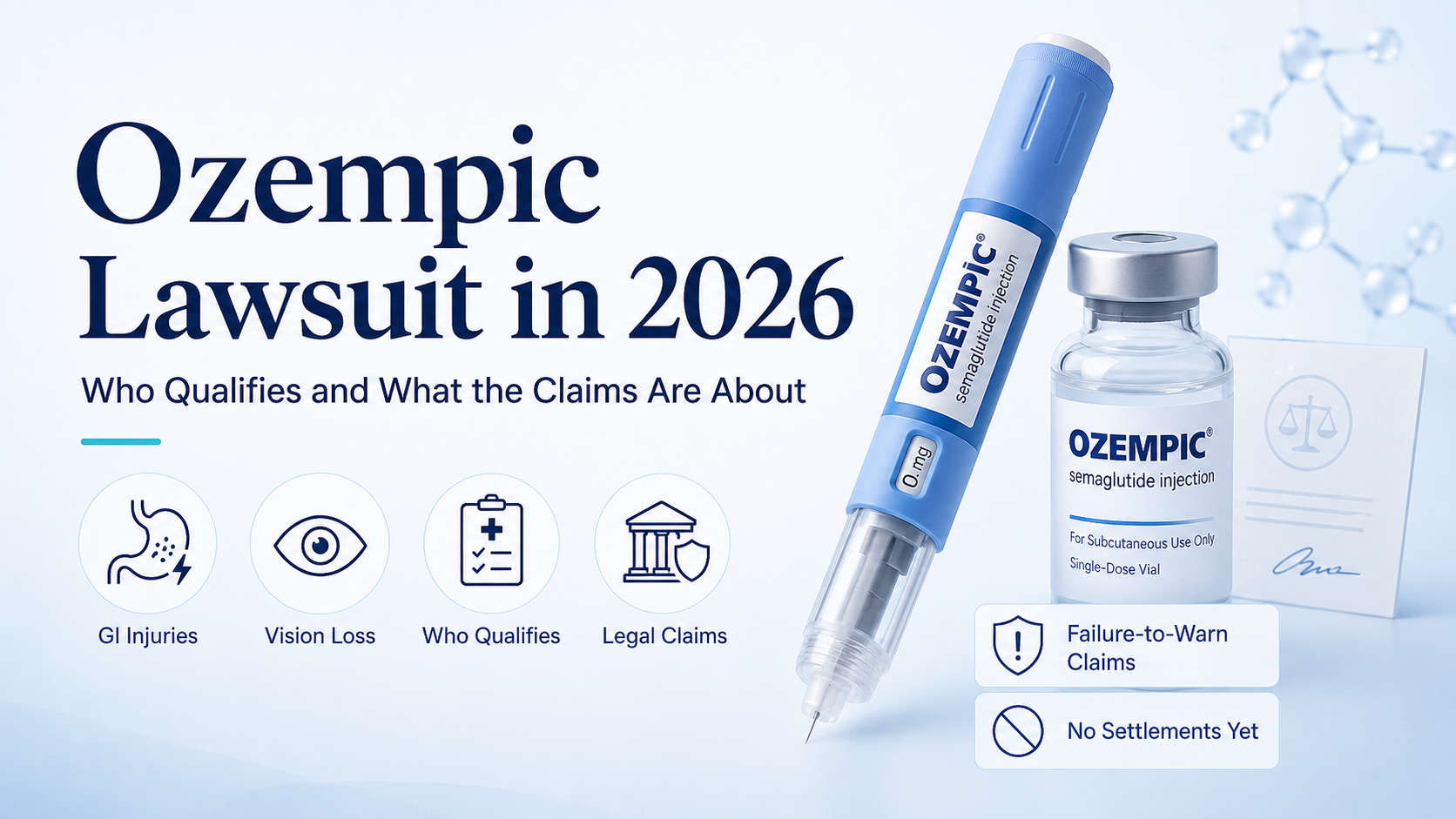
Ozempic Lawsuit in 2026: Who Qualifies and What the Claims Are About
To qualify for an Ozempic lawsuit, you’ll generally need a confirmed diagnosis: gastroparesis, ileus, intestinal blockage, gallbladder disease, or non-arteritic anterior ischemic optic neuropathy (NAION, a sudden loss of vision). The injury must have developed while you were taking Ozempic, Wegovy, Rybelsus, Mounjaro, or Zepbound. As of July 2026, federal courts have consolidated roughly 3,848 gastrointestinal-injury cases and 146 vision-loss cases into two separate multidistrict litigations. No settlements have been reached, and the first bellwether trials aren’t expected before late 2026.
The Claims: Gastrointestinal Injuries and Vision Loss
The lawsuits are failure‑to‑warn cases. Plaintiffs argue that Novo Nordisk (maker of Ozempic and Wegovy) and Eli Lilly (maker of Mounjaro and Zepbound) knew or should have known about severe side effects and did not adequately warn patients or doctors. The litigation is split into two multidistrict litigations (MDLs):
MDL 3094 — Gastrointestinal injuries (about 3,848 cases as of July 2026): Roughly 75% of complaints allege gastroparesis, the stomach failing to empty normally. Others cite ileus (intestinal shutdown), blockages, or gallbladder complications. Judge Karen S. Marston requires objective diagnostic proof — for gastroparesis, that typically means a gastric‑emptying study. Cases without it have been thrown out.
MDL 3163 — Vision loss (146 cases): These cases claim NAION, a painless stroke‑like loss of vision in one eye. The link to semaglutide is newer, and the FDA has not added a NAION warning to the U.S. label — a central allegation in the litigation.
Bellwether trial selection is expected in mid‑2026, and the first trials could start late in the year or early 2027. Legal analysts estimate potential total liability across both MDLs could exceed $2 billion, but any broad resolution is likely years away.
What to Do if You Have These Symptoms
If you’re taking one of these drugs and any of the following appear, see a doctor — don’t rely on internet forums to tell you what’s wrong:
- 1Severe abdominal pain, bloating, or the inability to pass stool or gas for days
- 2Persistent vomiting, especially of undigested food from hours earlier
- 3Sudden, painless vision loss or a dark “curtain” over one eye
These can signal a medical emergency. Stopping the drug on your own without medical guidance can be dangerous. Always discuss new or worsening symptoms with a doctor.
Ozempic and related drugs also carry the FDA’s most serious warning — a Boxed Warning — for thyroid C‑cell tumors. Check the full prescribing information for all warnings.
How Ozempic Works — and Where Things Go Wrong
Ozempic’s active ingredient is semaglutide, a GLP‑1 receptor agonist. It mimics a gut hormone that prompts the pancreas to release insulin when blood sugar is high, slows stomach emptying, and signals the brain you’re full. That slowdown controls blood sugar and curbs appetite. The trouble starts when the slowdown doesn’t stop: in some people, gastric emptying drops so much that it causes symptoms consistent with gastroparesis, ileus, or blockages.
Ozempic is FDA‑approved only for type 2 diabetes (plus certain heart and kidney protections), not for weight loss. Its sister brand Wegovy — same active ingredient, higher dose — is the FDA‑approved weight‑loss version. Many doctors prescribe Ozempic off‑label for weight loss, and that off‑label use strengthens the failure‑to‑warn argument: patients using a diabetes drug to shed pounds may not have been told about gastroparesis risks.
Mounjaro (tirzepatide) and Zepbound are Eli Lilly’s entries. They hit two gut‑hormone receptors (GIP and GLP‑1), which may drive greater weight loss but also carry the same gastrointestinal warnings. The lawsuits lump them together because the alleged injuries overlap. If you're comparing options, you can read more about Ozempic alternatives, including Mounjaro and Zepbound.
What the Evidence Says — and What’s Still Unknown
Early labeling for Ozempic didn’t mention gastroparesis or ileus. In September 2023, the FDA added an ileus warning. By October 2025, the label said the drug “is not recommended in patients with severe gastroparesis” but stopped short of saying it causes the condition. The lawsuits argue even that measured warning came too late.
Vision loss (NAION): Several large observational studies have linked semaglutide to a higher risk. A 2025 meta‑analysis found a pooled hazard ratio of 2.6 — meaning the risk was more than two and a half times higher among semaglutide users, with the elevation becoming statistically significant only after about two years of use. In June 2025, the World Health Organization warned that semaglutide drugs may rarely cause NAION. Still, every study to date shows association, not proven causation. The biological mechanism isn’t understood, and the FDA hasn’t added a label warning — a gap the lawsuits lean on heavily.
Stomach paralysis and sudden blindness do happen to some users. But an anecdote isn’t a clinical trial — researchers still don’t know why a small fraction develop these complications while millions take the drugs without issue.
What the Internet Gets Wrong
“Ozempic face” and “Ozempic vulva” are not medical diagnoses. Neither appears in medical literature. “Ozempic face” describes hollowed cheeks and sagging skin from rapid weight loss; “Ozempic vulva” refers to looseness or dryness in the pelvic area. Both result from rapid fat loss, not a direct effect of the drug on facial or vaginal tissue. The same changes occur after bariatric surgery or crash dieting. Labeling them drug‑specific side effects is misleading.
Before‑and‑after photos prove nothing. Celebrity transformations and “ozempic before and after” posts flood social media, but a photo can’t tell you whether the weight loss came from the drug, surgery, diet, or editing. Reliable data lives in randomized controlled trials, not viral TikToks.
Lawsuits don’t mean the drug is unsafe or banned. Ozempic and related drugs remain FDA‑approved, on the market, and prescribed daily. The legal fight is about whether manufacturers warned adequately, not whether the drug should be pulled. Thousands of lawsuits can exist without a single verdict — and as of mid‑2026, no verdict has been reached.
The lawsuits are stacking up, and the injuries are real. But as of mid‑2026, no one has been paid, and the first trials haven’t started yet.
This article is for general education only and does not replace medical advice from a licensed healthcare professional.
Frequently Asked Questions
Can I join the lawsuit if I took Wegovy, Mounjaro, or Zepbound instead of Ozempic? Yes. Both MDLs cover all brand‑name semaglutide and tirzepatide products: Ozempic, Wegovy, Rybelsus, Mounjaro, and Zepbound. The key is a qualifying injury with objective medical evidence.
Have any settlements been paid out yet? No. As of July 2026, no settlement has been reached in either MDL. Bellwether trials are expected in late 2026 or 2027, and any nationwide settlement would likely follow years later.
What is NAION (often called the “startling side effect”) and why is it part of these lawsuits? Non‑arteritic anterior ischemic optic neuropathy is a sudden, painless, often permanent loss of vision in one eye, sometimes called an “eye stroke.” Observational studies have found semaglutide users face a higher risk, but causation isn’t proven and the FDA has not added a label warning. The lawsuits argue patients should have been told about the possible risk, and the pop‑culture phrase “startling side effect” usually points to this same condition.
How does Wegovy differ from Ozempic? Both contain semaglutide. Wegovy is FDA‑approved for chronic weight management at a higher dose. Ozempic is approved only for type 2 diabetes. That difference — approved use and dose — matters for insurance coverage and legal claims. If you're weighing costs, see how much Ozempic costs per month in 2026.
Dr. Sheri Tomas
Comments (0)
Be the first to comment on this article.
