Is Trulicity the Same as Ozempic? Key Differences Explained
No. Trulicity (dulaglutide) and Ozempic (semaglutide) are different drugs. Compare uses, SUSTAIN-7 results, doses, side effects, switching and cost.
Written by Dr. Sheri Tomas. Updated November 10, 2026.
No, Trulicity is not the same as Ozempic. Both are once-weekly injections for type 2 diabetes, and both belong to the same drug class, called GLP-1 receptor agonists (medicines that copy a gut hormone which helps the body release insulin after meals, slows stomach emptying and reduces appetite). But they contain different molecules, come from different companies and carry different FDA labels. Trulicity contains dulaglutide and is made by Eli Lilly. Ozempic contains semaglutide and is made by Novo Nordisk. In the only head-to-head trial, SUSTAIN-7, Ozempic lowered blood sugar and weight more than Trulicity, but that trial tested only the lower doses of each drug. Trulicity is approved for children aged 10 and older; Ozempic is not. Ozempic has a kidney indication for people with type 2 diabetes and chronic kidney disease; Trulicity does not. Below we compare them using the 2026 labels.
Trulicity vs Ozempic: The Short Answer
- 1Different drugs: Trulicity is dulaglutide (Eli Lilly); Ozempic is semaglutide (Novo Nordisk). Same class, different molecules.
- 2Same main use: both treat type 2 diabetes and both have a heart-protection indication. Neither is FDA approved for weight loss.
- 3Head to head: in SUSTAIN-7, Ozempic lowered A1C and weight more, but only lower doses were tested (not Trulicity 3 or 4.5 mg or Ozempic 2 mg).
- 4Different labels: Trulicity is approved from age 10; Ozempic has an adult kidney indication that Trulicity lacks.
- 5Switching: neither label explains how to switch from another GLP-1 drug, so your prescriber chooses the starting dose.
- 6Shared warning: both carry the same boxed warning about thyroid C-cell tumors.
Is Trulicity the Same as Ozempic?
No. They are often confused because both are weekly shots under the skin. But dulaglutide and semaglutide are separate medicines, built differently and tested in separate trial programs. They are not generic versions of each other, and a pharmacist cannot swap one for the other without a new prescription. Semaglutide is also the active ingredient in other Novo Nordisk products, which is explained in Ozempic vs semaglutide; dulaglutide is sold as Trulicity. For background on how Ozempic works, see what Ozempic is, and for the wider drug class, see our overview of GLP-1 medications.
Neither drug is FDA approved for weight loss; both are approved to manage blood sugar in type 2 diabetes. More on that in whether Ozempic is approved for weight loss.
What Is Each One FDA-Approved For?
The table below summarizes the current US labels: Trulicity revised in March 2026 and Ozempic revised in May 2026. The wording differs in ways that matter for some patients, especially children and people with kidney disease.
Trulicity vs Ozempic: approved uses per the 2026 FDA labels
Maker
Eli Lilly
Novo Nordisk
Molecule
Dulaglutide
Semaglutide
Approval type
Biologic (BLA 125469)
New drug application (NDA 209637)
Type 2 diabetes blood sugar control
Yes
Yes
Ages
Adults and children 10 years and older
Adults only (use in children not established)
Heart (MACE) indication
Adults with type 2 diabetes and established heart disease or multiple heart risk factors
Adults with type 2 diabetes and established heart disease
Kidney indication
No
Yes: adults with type 2 diabetes and chronic kidney disease
Approved for weight loss
No
No
MACE stands for major adverse cardiovascular events: death from heart disease, a non-fatal heart attack or a non-fatal stroke. Ozempic's diabetes uses are covered in more depth in Ozempic for diabetes.
Who Can Take Trulicity but Not Ozempic?
Two groups stand out. The first is children. Trulicity is approved for children and teenagers aged 10 and older with type 2 diabetes, with a maximum pediatric dose of 1.5 mg. In Lilly's AWARD-PEDS trial of 154 young people aged 10 to 17, dulaglutide lowered A1C (a measure of average blood sugar over about three months) by 1.3 percentage points, while it rose 0.5 points on placebo, and 56.5% reached an A1C below 7% against 18.4% on placebo. The Ozempic label states that safety and effectiveness in children have not been established.
The second group is adults who have heart risk factors but no diagnosed heart disease. Trulicity's heart indication covers adults with type 2 diabetes who have established cardiovascular disease or multiple cardiovascular risk factors. Ozempic's heart indication covers only those with established cardiovascular disease. That reflects who was enrolled in each drug's heart trial, not proof that one drug protects better.
Dulaglutide vs Semaglutide: Which Lowers A1C and Weight More?
SUSTAIN-7, published in The Lancet Diabetes & Endocrinology in 2018, is the only trial that compared the two directly. It enrolled 1,201 adults with type 2 diabetes and an average starting A1C of 8.2% for 40 weeks. It paired the drugs at two levels: semaglutide 0.5 mg against dulaglutide 0.75 mg, and semaglutide 1 mg against dulaglutide 1.5 mg.
- 1A1C: semaglutide 0.5 mg lowered it by 1.5 points against 1.1 for dulaglutide 0.75 mg; semaglutide 1 mg lowered it by 1.8 against 1.4 for dulaglutide 1.5 mg. Both differences, about 0.4 points, were statistically significant.
- 2Weight: 4.6 kg against 2.3 kg at the lower pair, and 6.5 kg against 3.0 kg at the higher pair.
- 3Digestive side effects: 43% against 33% at the lower pair, and 44% against 48% at the higher pair.
- 4Stopped because of side effects: 8% against 5%, and 10% against 7% (semaglutide first).
The important caveat: SUSTAIN-7 tested only the lower doses. Trulicity can now go up to 3 mg and 4.5 mg, and Ozempic up to 2 mg, and none of those doses were in the trial. So SUSTAIN-7 shows that Ozempic was more effective at the doses compared, but it cannot tell you how the highest doses of each drug compare today.
Do Both Protect the Heart?
Both drugs reduced major heart events in large placebo-controlled trials, but they were never compared with each other on heart outcomes.
- 1REWIND (Trulicity): 9,901 adults took dulaglutide 1.5 mg or placebo for a median of 5.4 years. Major heart events occurred in 12.0% against 13.4% (hazard ratio 0.88). Only 31.5% had established heart disease.
- 2SUSTAIN-6 (Ozempic): 3,297 adults were followed for 104 weeks. Major heart events occurred in 6.6% against 8.9% (hazard ratio 0.74). 83.0% had established heart disease, chronic kidney disease or both.
A hazard ratio below 1 means fewer events on the drug than on placebo. It is tempting to compare 0.88 with 0.74, but the trials enrolled very different people, lasted different lengths of time and used different methods, so the numbers cannot be used to rank the two drugs. The fair summary is that both have shown heart benefit in their own populations. More on Ozempic's heart data is in Ozempic and heart health.
Does Ozempic Help the Kidneys, and Does Trulicity?
Ozempic has a kidney indication; Trulicity does not. The FDA approved it on January 28, 2025, based on the FLOW trial. FLOW enrolled 3,533 adults with type 2 diabetes and chronic kidney disease and tested semaglutide 1 mg against placebo for a median of 3.4 years. Semaglutide lowered the risk of the main outcome, a combination of sustained loss of kidney function, kidney failure and death from heart or kidney causes, by 24% (hazard ratio 0.76), an absolute reduction of 4.9 percentage points at three years. Ozempic's label sets 1 mg as the maintenance dose for this use. Trulicity has no kidney indication; that does not mean it harms the kidneys.
How Do the Doses and Pens Compare?
Both drugs start low and are increased in steps at least four weeks apart to limit stomach side effects. The milligram numbers are not interchangeable: 1.5 mg of dulaglutide is not equal to 1.5 mg of anything in Ozempic, because they are different molecules.
Trulicity vs Ozempic dosing and pens per the 2026 FDA labels
Starting dose
0.75 mg once weekly
0.25 mg once weekly for 4 weeks (a starter dose), then 0.5 mg
Increases
To 1.5 mg after 4 weeks, then 1.5 mg steps at least 4 weeks apart
To 1 mg, then 2 mg, at least 4 weeks apart
Maximum dose
4.5 mg (children: 1.5 mg)
2 mg (kidney indication: 1 mg maintenance)
Pens
Single-dose pens: 0.75, 1.5, 3 and 4.5 mg per 0.5 mL
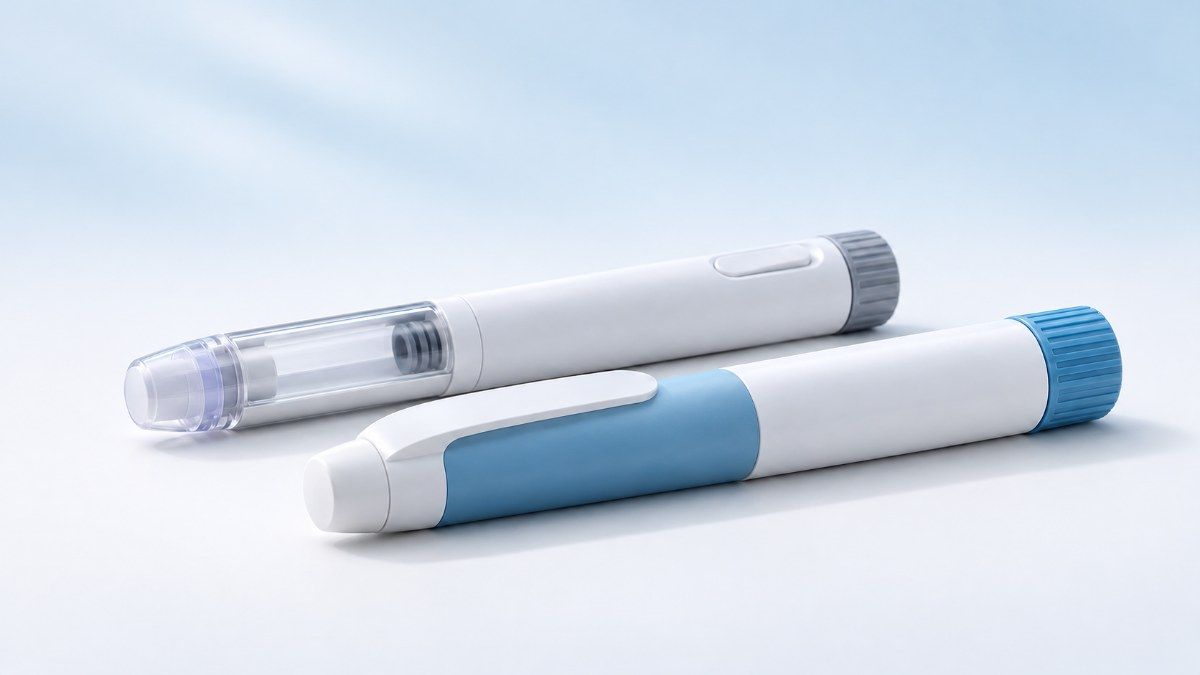
Multi-dose pens: 2 mg/3 mL (0.25 or 0.5 mg doses), 4 mg/3 mL (1 mg), 8 mg/3 mL (2 mg)
Missed dose
Take it if 3 or more days (72 hours) remain before the next dose; otherwise skip it
Take it within 5 days; otherwise skip it
Ozempic's missed-dose rules are explained in what happens if you miss an Ozempic dose.
Are the Side Effects Different?
Side effects are similar and mostly digestive, usually strongest when starting or increasing the dose. Label rates for the most common reactions:
- 1Trulicity 0.75 mg / 1.5 mg: nausea 12.4% / 21.1%, diarrhea 8.9% / 12.6%, vomiting 6.0% / 12.7%, abdominal pain 6.5% / 9.4%, decreased appetite 4.9% / 8.6%.
- 2Ozempic 0.5 mg / 1 mg (placebo in brackets): nausea 15.8% / 20.3% (6.1%), diarrhea 8.5% / 8.8% (1.9%), vomiting 5% / 9.2% (2.3%), abdominal pain 7.3% / 5.7% (4.6%), constipation 5% / 3.1% (1.5%).
These figures come from different trials, so small differences between the two labels should not be over-read; SUSTAIN-7 is the better guide to how they compare directly. Both labels carry the same boxed warning about thyroid C-cell tumors, seen in rodent studies, and both say not to use the drug if you or a family member has had medullary thyroid carcinoma (MTC) or multiple endocrine neoplasia type 2 (MEN 2). Tips for managing stomach symptoms are in Ozempic diarrhea.
Can You Switch From Trulicity to Ozempic?
Yes, people do switch, but only with a prescriber's direction. Neither the Trulicity label nor the Ozempic label gives instructions for switching from another GLP-1 drug, and there is no official conversion chart. Some websites publish Trulicity-to-Ozempic dose tables, but these have no basis in either FDA label, so we do not reproduce one here. SUSTAIN-7 paired certain doses for comparison; it did not establish equivalent doses.
In practice, your prescriber will decide which Ozempic dose to start, when to take the first dose relative to your last Trulicity injection, and how to increase it, based on your blood sugar, side effects and other medicines. Do not take both drugs together, and do not work out a new dose on your own.
Are They in Short Supply, and How Much Do They Cost?
Supply has improved for both. As of November 2026, the European Medicines Agency lists the Trulicity shortage as resolved (page last updated February 17, 2026), and Australia's TGA says Lilly advised that the shortage has resolved. In the US, an American Society of Health-System Pharmacists (ASHP) bulletin we reviewed said Lilly has Trulicity available in all four strengths, though the page showed a last update of January 9, 2025, so it may not reflect current conditions. We could not confirm the current FDA shortage listing for dulaglutide; ask your pharmacy about local stock. For Ozempic, Drug Topics reported that the FDA declared the semaglutide shortage resolved on February 21, 2025.
On cost, dated figures are the only reliable ones. Lilly's Trulicity Savings Card offers as little as $25 for commercially insured patients, up to $150 off per month and $1,950 per year, and expires December 31, 2026. For Ozempic, Fierce Pharma reported in November 2025 self-pay prices of $349 a month for most doses and $499 for the highest, with a list price of about $998; USA Today reported in February 2026 that Ozempic's list price will drop to $675 a month on January 1, 2027. Current Ozempic pricing is tracked in how much Ozempic costs per month in 2026, and coverage rules are in does insurance cover Ozempic.
When to Talk to Your Doctor
- 1You want to switch between Trulicity and Ozempic, for any reason
- 2You have severe or lasting nausea, vomiting or diarrhea, which can lead to dehydration
- 3You have severe stomach pain that may spread to your back, a possible sign of pancreatitis
- 4You notice a lump or swelling in your neck, trouble swallowing or hoarseness
- 5You take insulin or a sulfonylurea and have low blood sugar symptoms such as shakiness or sweating
- 6You are pregnant, planning a pregnancy or breastfeeding
Questions to Ask Your Doctor Before Choosing or Switching
- 1Which drug fits my goals: A1C, heart protection, kidney protection or weight?
- 2Do I have chronic kidney disease that makes Ozempic's kidney indication relevant?
- 3If I switch, what dose do I start on, and when do I take the first injection after my last Trulicity dose?
- 4How will we handle side effects while the dose goes up?
- 5Which one does my insurance cover, and is a savings program available?
- 6Do any of my other diabetes medicines need adjusting?
The Bottom Line
Trulicity and Ozempic are not the same drug. Both are once-weekly GLP-1 injections for type 2 diabetes with proven heart benefits, but Trulicity (dulaglutide) is approved from age 10 and covers adults with heart risk factors, while Ozempic (semaglutide) has a kidney indication and outperformed Trulicity on A1C and weight in SUSTAIN-7 at the lower doses tested. Their heart trials cannot be used to rank them, and there is no official dose conversion between them, so any switch should be planned with your prescriber.
FAQ
Neither is FDA approved for weight loss. In SUSTAIN-7, semaglutide led to more weight loss than dulaglutide at the doses compared (6.5 kg against 3.0 kg at the higher pair), but the highest current doses of each drug were not tested.
No. They are both GLP-1 receptor agonists and are not meant to be used together. If you are moving from one to the other, your prescriber will tell you when to stop one and start the other.
No. Trulicity contains dulaglutide and Ozempic contains semaglutide. They are different brand-name medicines from different companies, not generic versions of each other.
No. Trulicity is a biologic, so any copy would be a biosimilar rather than a generic, and as of November 2026 we did not find one available in the US. Generic semaglutide has been approved in Canada, but not in the US, where Novo Nordisk reports the compound patent runs to 2032.
Yes. Trulicity is approved for children and teenagers aged 10 and older with type 2 diabetes, with a maximum dose of 1.5 mg. Ozempic is not approved for children.
There is no label-defined equivalent. SUSTAIN-7 compared pairs of doses (dulaglutide 0.75 mg with semaglutide 0.5 mg, and 1.5 mg with 1 mg), but it did not set conversions. Your prescriber chooses the Ozempic dose when you switch.
Sources
- 1Eli Lilly. Trulicity (dulaglutide) prescribing information, revised 03/2026, US FDA, 2026
- 2Novo Nordisk. Ozempic (semaglutide) prescribing information, revised 05/2026, US FDA, 2026
- 3Pratley RE et al. Semaglutide versus dulaglutide once weekly in patients with type 2 diabetes (SUSTAIN 7), Lancet Diabetes & Endocrinology, 2018
- 4Gerstein HC et al. REWIND: dulaglutide and cardiovascular outcomes in type 2 diabetes (trial summary), Lancet / American College of Cardiology, 2019
- 5Marso SP et al. Semaglutide and cardiovascular outcomes in patients with type 2 diabetes (SUSTAIN-6), New England Journal of Medicine, 2016
- 6FDA approves Ozempic (semaglutide) as the only GLP-1 RA to reduce the risk of worsening kidney disease, Novo Nordisk, 2025
- 7Lilly's AWARD-PEDS trial investigating use of Trulicity (dulaglutide) in youth and adolescents with type 2 diabetes showed superiority in A1C reduction vs placebo, Eli Lilly, 2022
- 8Trulicity shortage, European Medicines Agency, 2026
- 9The current Trulicity (dulaglutide) supply situation, Therapeutic Goods Administration
- 10Dulaglutide injection drug shortage detail, American Society of Health-System Pharmacists, 2025
- 11FDA declares shortage of Ozempic, Wegovy resolved, Drug Topics, 2025
- 12Novo to cut Ozempic and Wegovy prices, USA Today via The Spokesman-Review, 2026
- 13Novo unveils newly reduced self-pay prices for Wegovy and Ozempic, Fierce Pharma, 2025
- 14Canada approves generic semaglutide from Dr. Reddy's, Drug Discovery & Development, 2026
This article summarizes FDA labels and published research for general information and is not a substitute for medical advice. Several sources are materials from the drugs' manufacturers, Eli Lilly and Novo Nordisk. Prices and supply status change; check with your pharmacy as of the date you read this.

Dr. Sheri Tomas
Author
Comments (0)
Be the first to comment on this article.
More articles